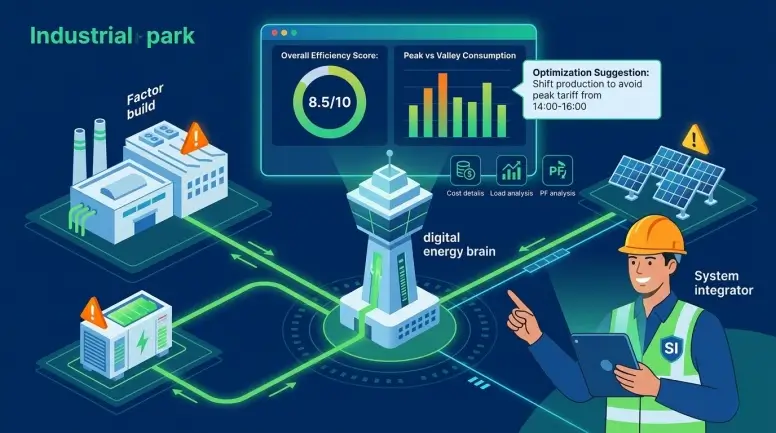

In modern cities, commercial buildings (such as large shopping malls, high-end office buildings, and star-rated hotels) are not only symbols of economic vitality but also major energy consumers. Statistics show that lighting accounts for approximately 30% to 40% of the total energy consumption of commercial buildings. Under the "dual carbon" (carbon peaking and carbon neutrality) context, finding efficient, intelligent, and aesthetically pleasing new energy-saving lighting solutions has become an inevitable trend in commercial real estate operations.
This article will construct a comprehensive new energy-saving solution for commercial building lighting from five dimensions: "technology upgrade, intelligent control, refined metering, design optimization, and photovoltaic integration."
1. Technology Upgrade: Entering the Era of "Ultra-High Luminous Efficiency"
While traditional LED lighting is already widespread, the new solution emphasizes low-carbon upgrades across the entire industry chain:
Ultra-High Luminous Efficiency Lamps: Utilizing next-generation gallium nitride (GaN) chip-driven LED lamps, luminous efficiency is comprehensively improved, saving approximately 20% more energy than ordinary LEDs.
Low-Carbon Lifecycle: Lighting fixtures are made from recyclable materials, reducing the product's carbon footprint.
2. Intelligent Control: From "Timed On/Off" to "On-Demand Sensing"
The integration of the Internet of Things (IoT) and artificial intelligence (AI) gives the lighting system a "brain."
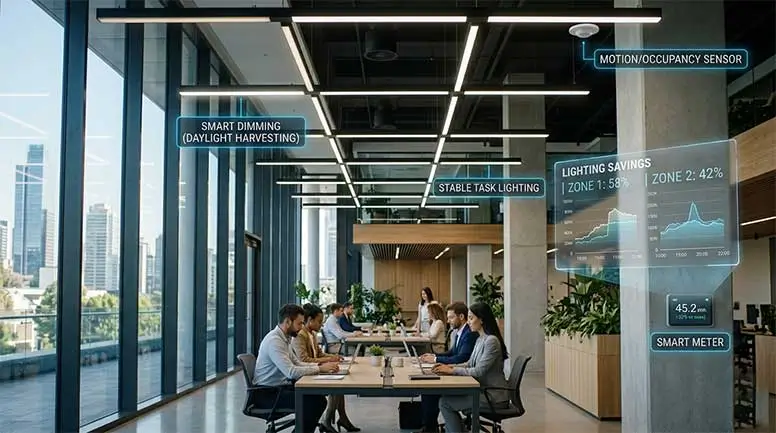
Daylight Sensing Compensation: Illuminance sensors are placed in areas near windows. When there is ample outdoor sunlight, the indoor light brightness is automatically reduced; when it is cloudy or at dusk, the light is automatically supplemented to maintain a constant standard of illuminance on the desktop.
Radar Microwave Sensing: In areas such as underground parking garages, corridors, and restrooms, a "lights on when people/vehicles approach, lights off when people/vehicles leave (keeping them dimly lit)" motion sensing strategy is adopted to avoid meaningless idling.
AI Behavioral Pattern Prediction: Based on historical data, the system automatically identifies peak and off-peak pedestrian traffic in commercial buildings and adjusts the lighting scene modes for different areas in advance (such as "operating mode," "welcome mode," and "closing cleaning mode" for shopping malls).
3. Refined Metering: Smart Meters as an "Energy Consumption Safeguard"
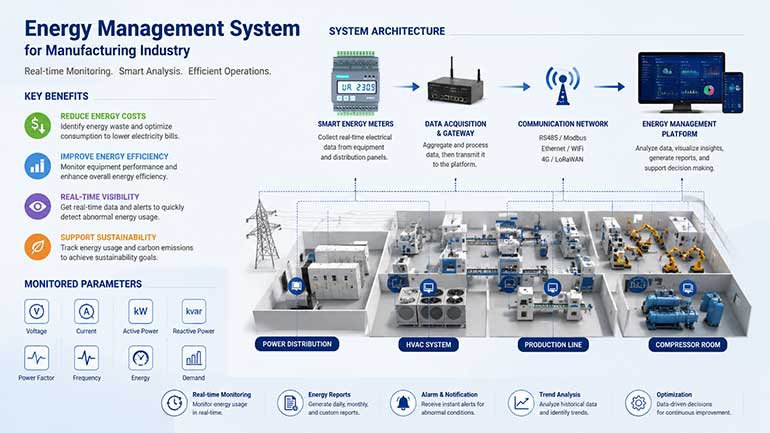
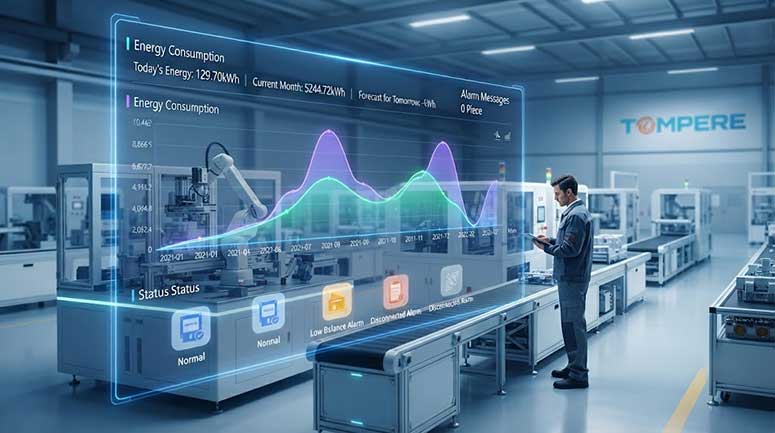
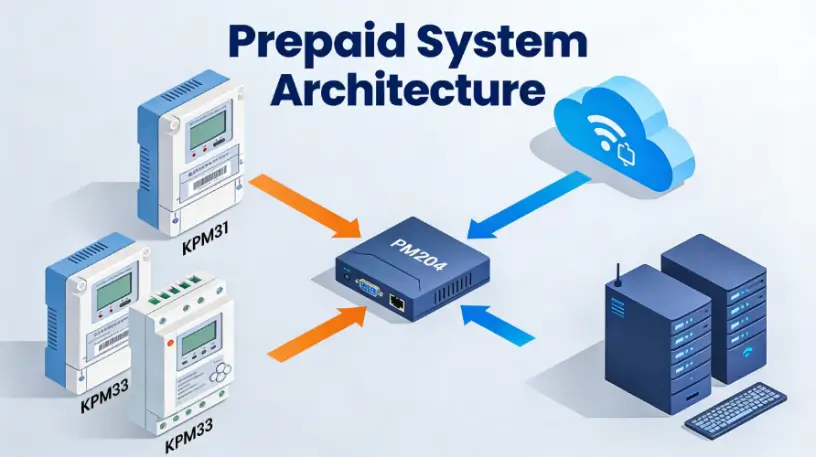
In the past, lighting in commercial buildings was often a "mess." The new solution introduces an IoT-enabled multi-functional smart energy meter system, making every kilowatt-hour traceable:
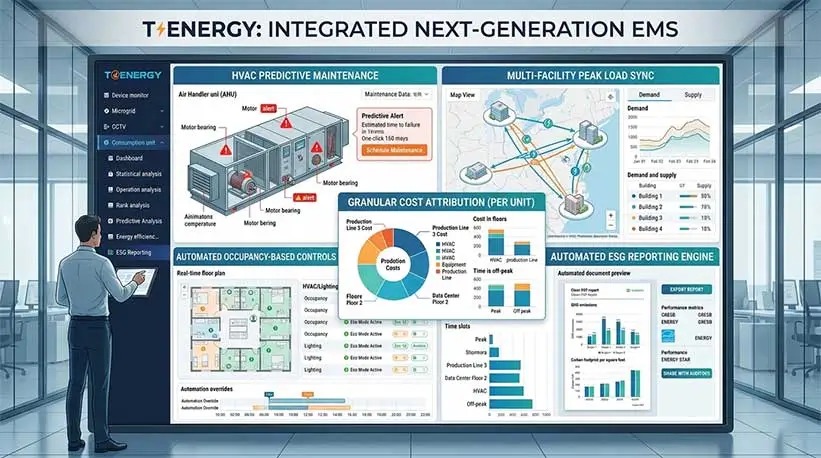
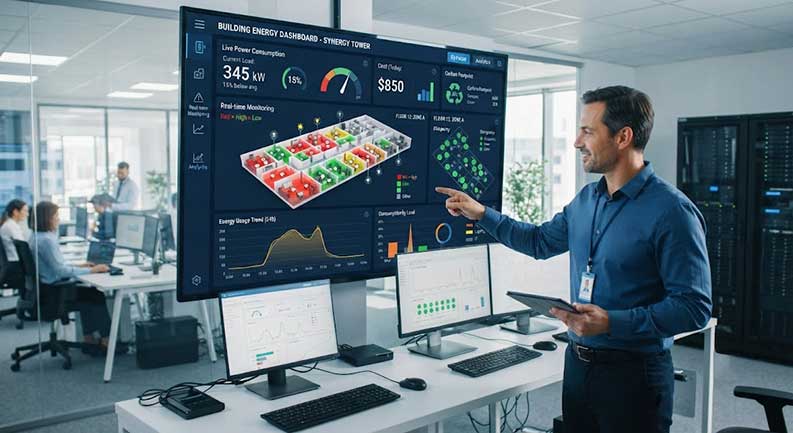
Zone-based and Layer-based Metering: Instead of a single meter for the entire building, smart meters are installed independently in different functional areas such as office areas, shops, public corridors, and underground parking garages. Through refined reconciliation, managers can instantly identify "which area forgot to turn off the lights after closing time."
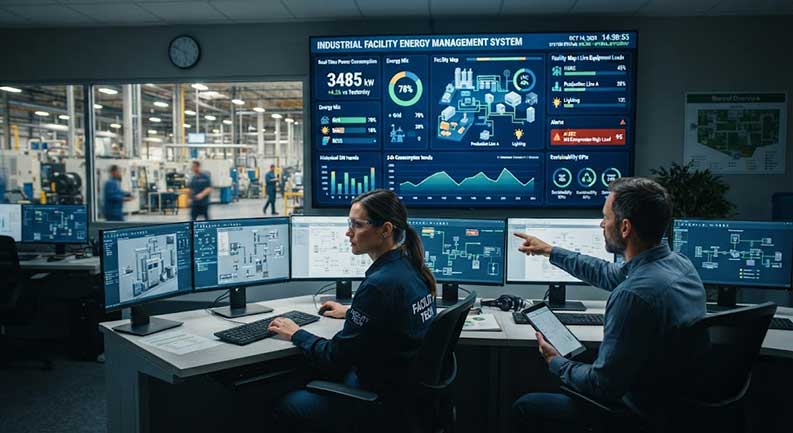
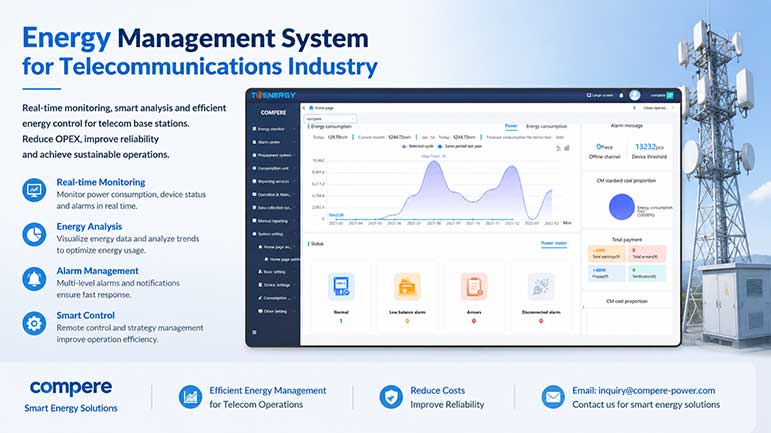
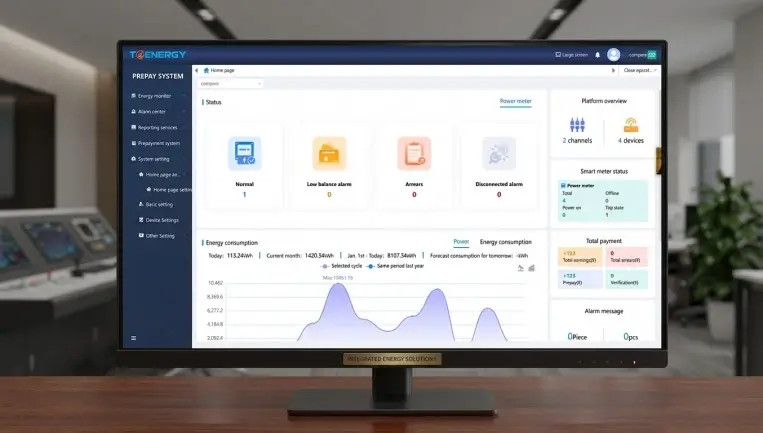
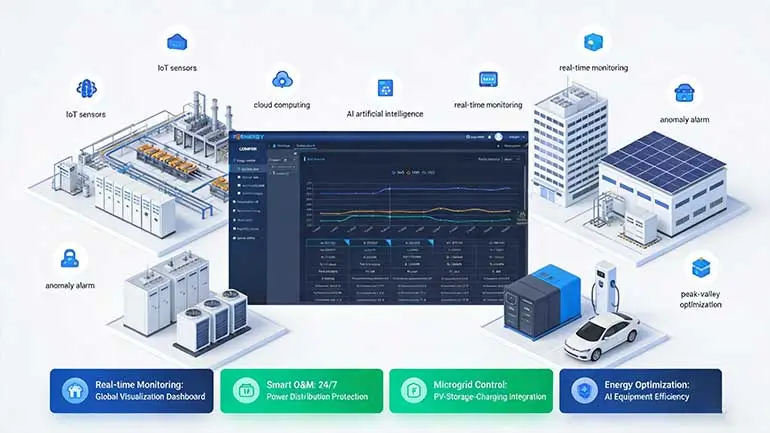
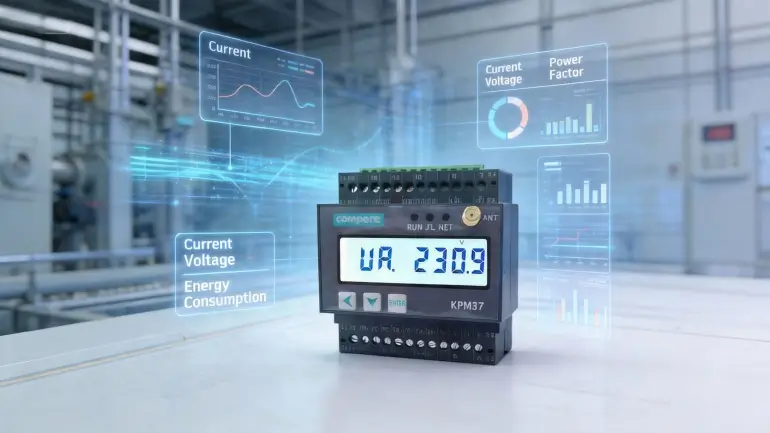
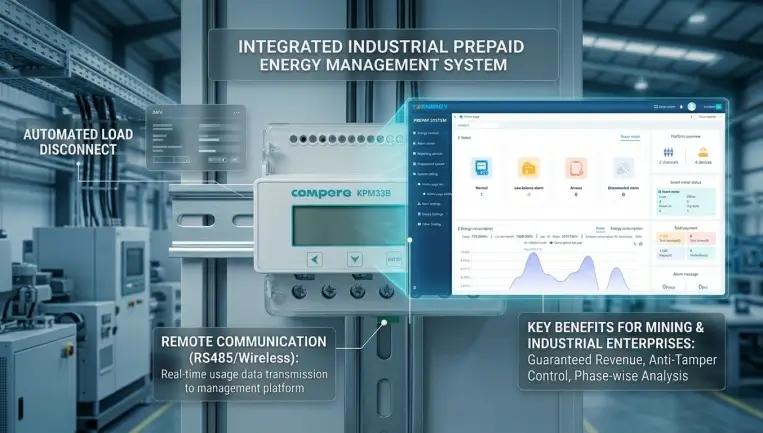
Second-level Real-time Monitoring: Smart meters upload current, voltage, and power consumption data to a cloud management platform in real time via wireless network. If lighting power consumption in a certain area spikes abnormally, the system will immediately alarm, indicating potential leakage or equipment aging malfunction.
Tenant Self-Reconciliation: For mall tenants or office building customers, smart meter data can be directly connected to the property management app, allowing tenants to clearly see their lighting electricity bills and using data to incentivize tenants to develop energy-saving habits.
4. Design Optimization: Space "Carbon Reduction" and Visual "Value Enhancement"
Energy saving doesn't mean dimming; it means using light where it's most needed.
Separation of Ambient and Task Lighting: Reducing the overall brightness of background lighting and using track lighting, spotlights, and other localized accent lighting to highlight merchandise or workstations creates visual depth while reducing overall power consumption.
Utilizing Building Reflection: Increasing the reflectivity of walls and floors and using high-reflectivity interior materials allows limited light flux to be reflected multiple times within the space, enhancing overall brightness.
5. Green Integration: BIPV (Building Integrated Photovoltaics) Lighting System
Deeply integrating lighting systems with new energy building technologies:
Building Photovoltaics: Utilizing the rooftops and glass curtain walls of commercial buildings to generate electricity.
DC Power Supply: Distributed photovoltaic power generation directly supplies DC LED lights, eliminating the need for AC-DC inverter conversion and further reducing energy loss.
The following is a simulated comparison of the benefits of adopting the new energy-saving solution versus the traditional lighting solution in commercial buildings:
| Dimension / Metric | Traditional Lighting | Smart Energy-Saving Scheme | Performance & Benefits |
|---|---|---|---|
| Lighting Energy Metering | Single master meter for the entire building; unable to track specific area consumption. | Full smart meter coverage with granular area-by-area and floor-by-floor tracking. | Eliminates waste from overnight/forgotten lights |
| Avg. Integrated Energy Saving Rate | Baseline (0%) | 45% - 65% | Saves over half the electricity bill |
| Average Lifespan of Fixtures | Approx. 30,000 hours | Approx. 60,000 hours (due to smart dimming & thermal control) | Maintenance costs cut by 50% |
| Spatial Experience & Comfort | Monotonous lighting, prone to visual fatigue. | Dynamic healthy light environment supporting constant illuminance & circadian rhythms. | Boosts customer dwell time & office productivity |
The value of introducing this energy-saving lighting solution into commercial buildings extends beyond just "saving money":
Asset Appreciation: It helps commercial buildings more easily obtain LEED, WELL, or domestic three-star green building certifications. The data support provided by smart meters is a significant advantage in various green building assessments, directly increasing the property's rental premium.
Short Investment Return Cycle: Although smart meters and high-efficiency lamps require some initial investment, thanks to the extremely high energy saving rate and reduced maintenance costs, the overall project payback period is typically between 1.5 and 3 years.
ESG Performance Highlights: The lighting energy consumption and carbon emission reduction reports automatically generated by smart meters are accurate and tamper-proof, perfectly meeting the ESG (Environmental, Social, and Governance) information disclosure requirements of listed companies.
The future of commercial building lighting will no longer merely "illuminate spaces," but will serve as the organic neurons of green and intelligent buildings. Through a new solution combining "high-efficiency hardware + AI intelligent control + smart meter precision measurement", commercial spaces can achieve energy conservation through data-driven approaches without sacrificing comfort, truly realizing a win-win situation for both commercial value and environmental benefits.
Have you any problem, please contact us via message