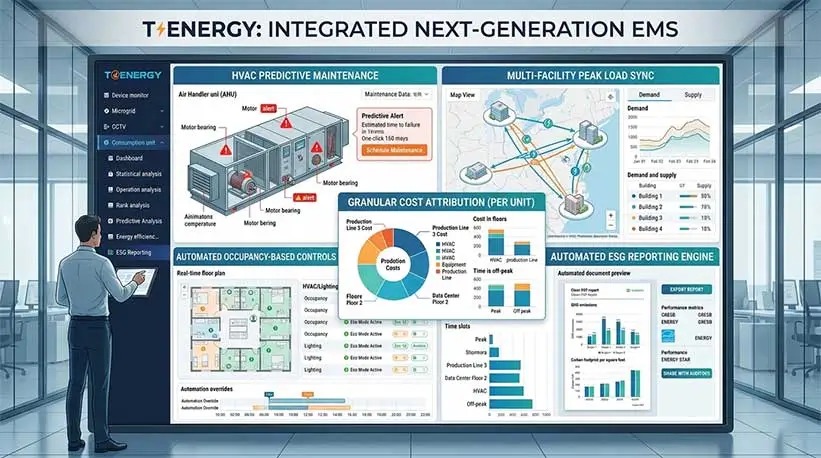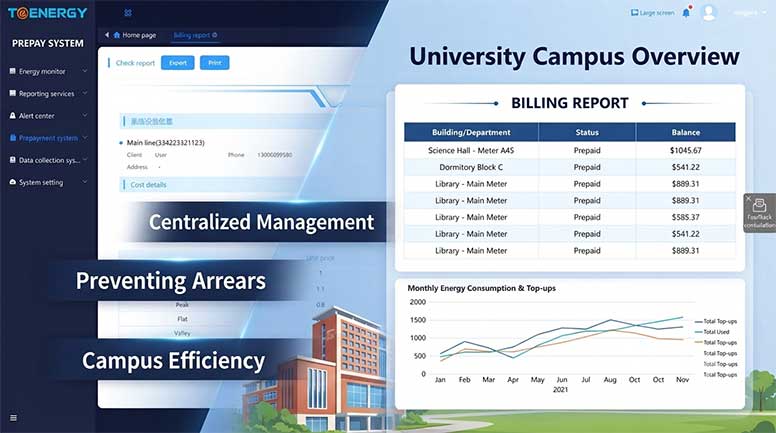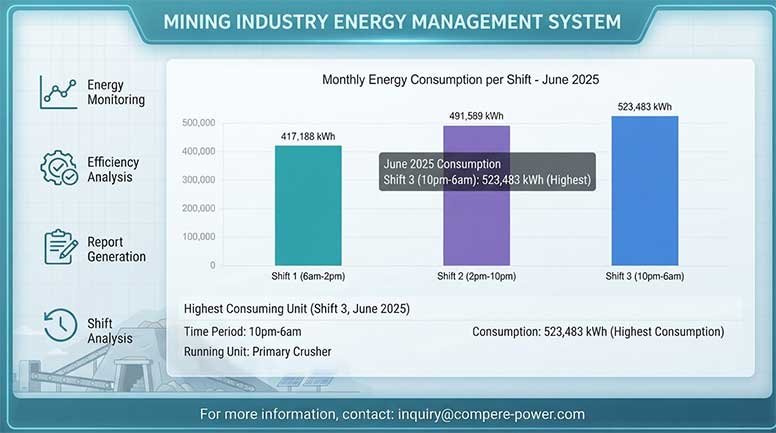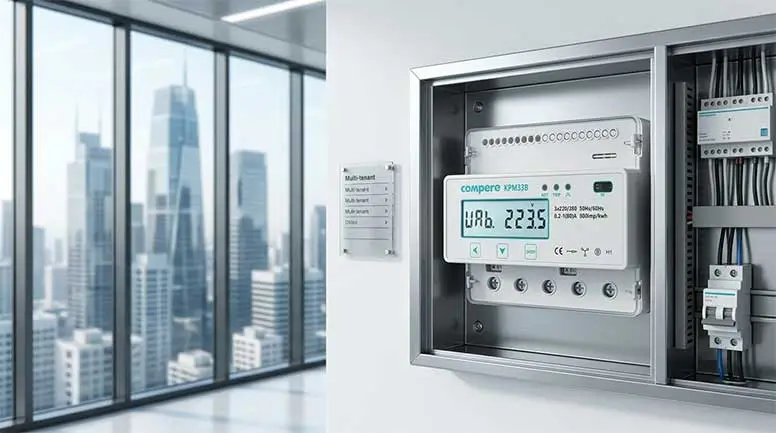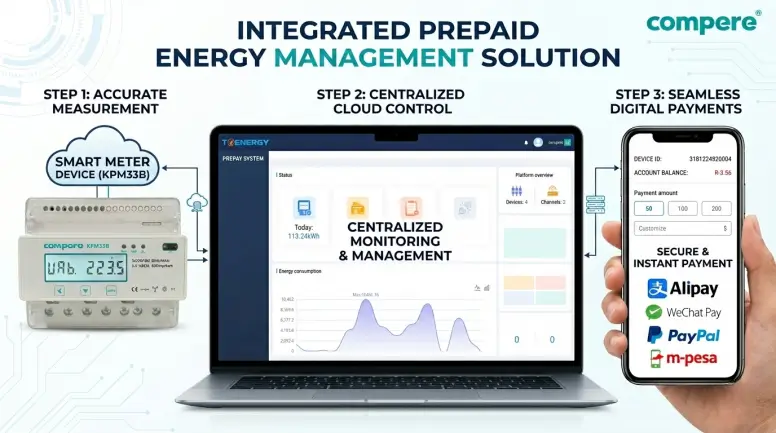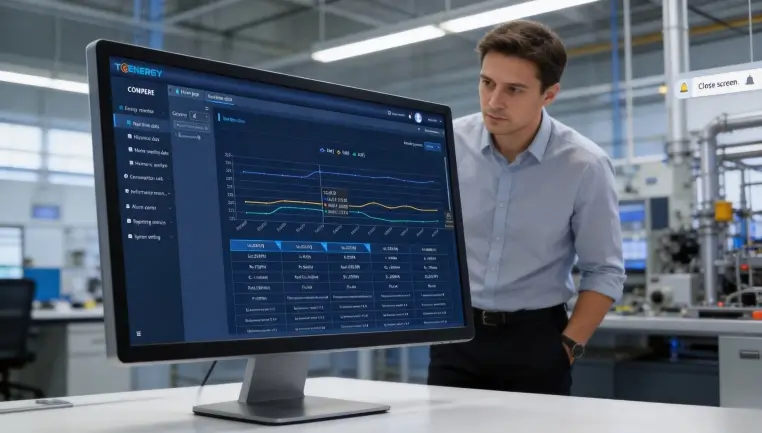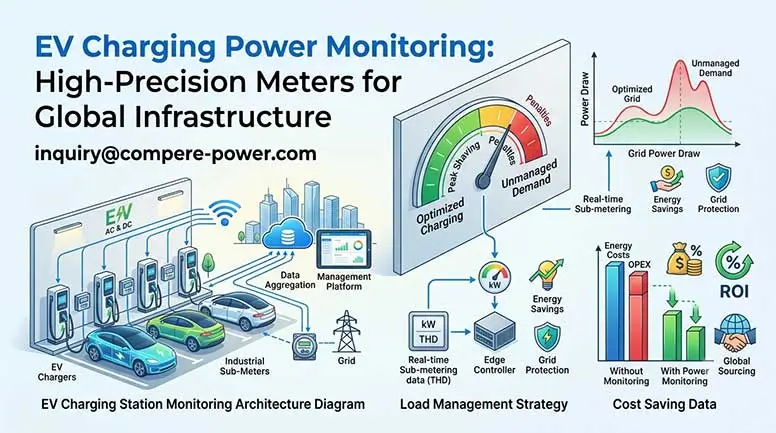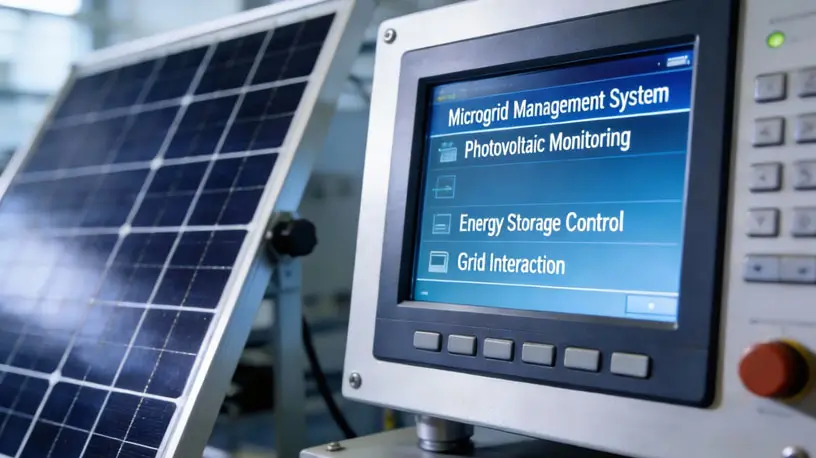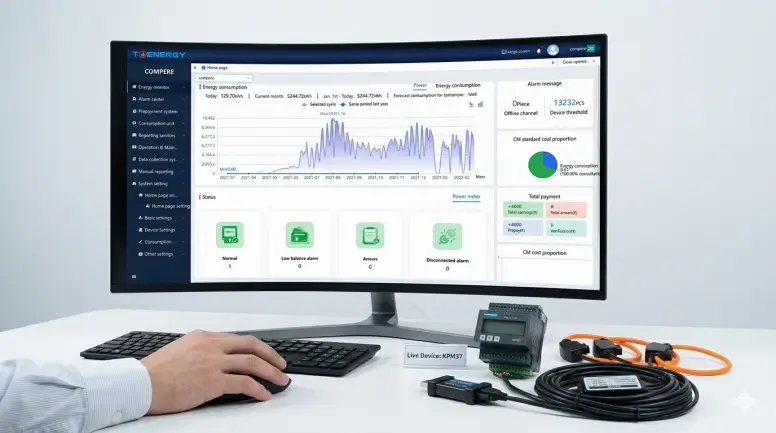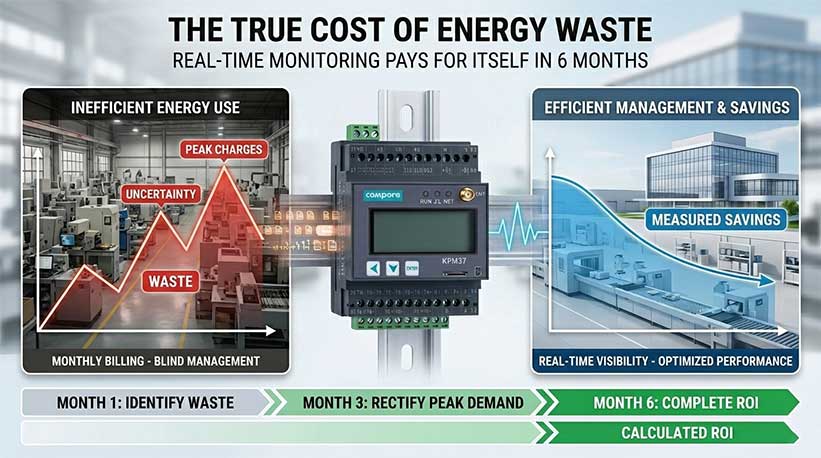

An energy management system is no longer just an internal monitoring tool for enterprises. For energy service companies, it is a comprehensive platform integrating data acquisition, real-time monitoring, intelligent analysis, optimized control, and customer service. Its core tasks are:
Gas Flow Analysis:Clearly understand the entire picture of energy production, transmission, distribution, and consumption within a region.
Resource Allocation Optimization:Achieve multi-energy complementarity (electricity, gas, heat, cooling), peak shaving, and valley filling to improve overall energy efficiency.
Customer Service Empowerment:Provide end-users with diagnostics, reports, early warnings, and optimization suggestions, creating value-added services.
Operational Decision Support:Based on data insights, guide grid planning, operation and maintenance, demand response, and market transactions.
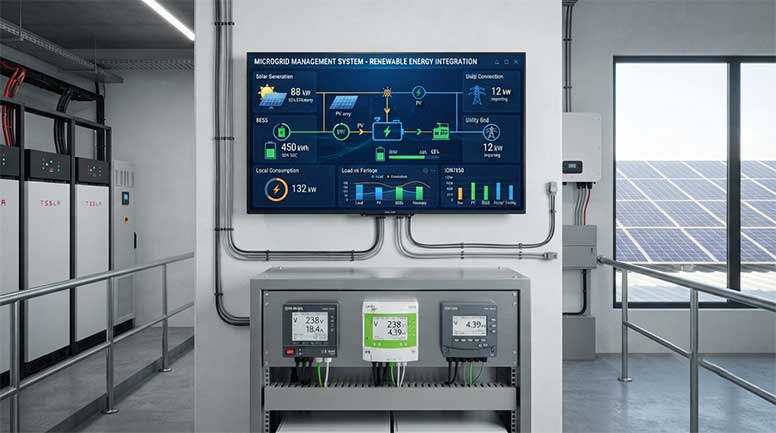
Scenario 1: Regional Integrated Energy Monitoring and Dispatch Application: The center uses the EMS to achieve centralized and visualized management of "energy microgrids" such as industrial parks, commercial complexes, and large communities within its jurisdiction.
Value:
Panoramic Monitoring: A comprehensive overview of energy data at each node (power generation, consumption, and energy storage status).
Intelligent Scheduling: Automatically schedules distributed photovoltaic (PV) systems, energy storage systems, and flexible loads based on forecasts and real-time electricity prices to achieve optimal regional benefits.
Fault Warning and Rapid Response: Proactively detects equipment anomalies, shortening fault recovery time.
Scenario Two: Deep Energy Services for Enterprise Users Application: The center deploys EMS substations or provides SaaS services to enterprise customers.
Value:
Energy Efficiency Diagnostic Reports: Regularly generates professional reports, accurately identifying potential energy-saving areas (such as air compressors and air conditioning systems).
Demand Management and Electricity Cost Optimization: Assists enterprises in demand control, rationally utilizing peak-valley electricity pricing to directly reduce electricity costs.
Carbon Emission Monitoring: Automatically calculates the enterprise's carbon footprint, providing data support for participating in carbon trading and applying for green certification.
Scenario Three: Distributed Energy Integration and Trading Services Application: Manages a large number of connected residential PV, small wind power, and energy storage devices, and explores localized energy trading.
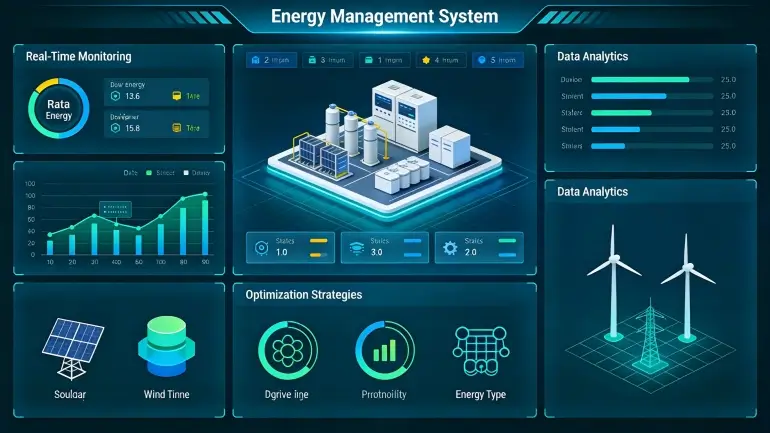
Value:
"Virtual Power Plant" Aggregation: Aggregates dispersed resources into controllable units, participating in grid peak-shaving ancillary services and creating new revenue streams.
Green Electricity Traceability and Certification: Ensures the traceability and certification of green energy production and consumption data.
Point-to-Point Energy Trading Pilot: Provides a technological platform for future surplus electricity trading among users within communities.
Scenario 4: Public Institutions and Urban Energy Management
Application: Serves government buildings, schools, hospitals, and other public institutions, achieving intensive and refined energy management.
Value:
Quota Management and Benchmarking Assessment: Provides precise data tools for government departments to implement "dual control" of energy consumption in public institutions.
Energy Saving Retrofit Effect Evaluation: Quantitatively evaluates the energy savings and return on investment of retrofit projects such as lighting and air conditioning.
Demonstration Effect and Social Responsibility: Establishes a green public image and leads a social trend of energy conservation.
A powerful EMS platform is typically built upon the following technical layers:
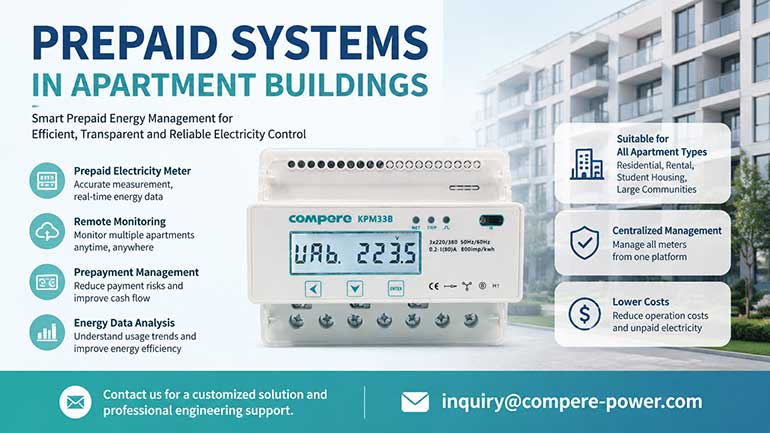
Perception Layer: Smart meters, IoT sensors, gateways, etc., enabling accurate collection and reliable uploading of massive amounts of data.
Network Layer: Utilizing 5G, fiber optics, power line carrier, and other communication technologies to ensure low-latency, high-security data transmission.
Platform Layer (Core):
Data Platform: Processes massive amounts of time-series data, providing efficient storage, computing, and analysis capabilities.
Application Platform: Encapsulates common business functions, such as load forecasting, optimization algorithms, and reporting engines, supporting rapid development of new services.
Application Layer:
Internal Operational Applications: Large-screen dashboard, alarm center, maintenance work order system.
External Customer Service Applications: User energy efficiency portal, mobile app, customized report push.
Security System: Network security, data security, and privacy protection mechanisms throughout all layers, complying with information security compliance requirements.
Background: The center serves thousands of industrial and commercial clients, facing pressure from service homogenization and a single profit model.
Action: Invested in and constructed a municipal-level smart energy management platform.
Phase I: Connected hundreds of enterprises and all distributed photovoltaic power stations, achieving panoramic monitoring.
Phase II: Provided in-depth energy efficiency audits and optimization services to 50 high-energy-consuming enterprises.
Phase III: Aggregated 30MW of flexible load and participated in the provincial demand response market.
Results:
Average energy saving rate for enterprise clients reached 5%-8%, generating over ten million yuan in energy-saving value annually.
Annual revenue from demand response reached several million yuan, opening up a new profit point.
Customer satisfaction and loyalty significantly improved, driving growth in other traditional businesses.
The center successfully transformed into a regionally renowned "integrated energy service provider."
For energy service centers, deploying an energy management system is no longer an "optional question," but a must-answer question concerning future survival and development. This is not merely an upgrade of technological tools, but a comprehensive reshaping of service concepts, business models, and organizational capabilities.
Through EMS, energy service centers can: Internally, improve operational efficiency, ensure safety, and explore new profit growth points.
Externally, deepen customer value, enhance customer loyalty, and build differentiated core competitiveness.
In an era where the energy revolution and the digital revolution converge, whoever takes the lead in utilizing the "digital key" of the energy management system will unlock the door to a green, efficient, and win-win smart energy future. This is not only a successful transformation for the service center itself, but also a crucial contribution to the sustainable development of society as a whole and the achievement of "dual-carbon" goals.
Have you any problem, please contact us via message