
In today's business environment, "sustainable development" has transformed from a buzzword in corporate public relations into a financial KPI that determines a company's survival. However, while many managers talk about energy conservation and emission reduction, a hidden profit killer is quietly eroding the bottom line for businesses: energy waste.
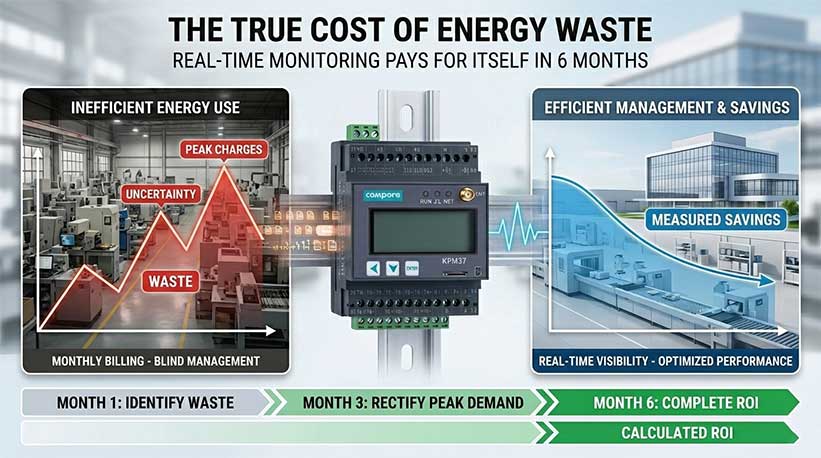
Most companies still rely on traditional monthly electricity bills to manage energy consumption. This approach is like driving while looking in the rearview mirror—by the time you notice the problem, the damage is already done. This article will reveal the true cost of energy waste and demonstrate why introducing a real-time energy monitoring system is not only an environmental initiative but also a high-return financial investment that can recoup its costs within 6 months.
Many business owners and operations managers often mistakenly believe that energy consumption is an unavoidable fixed operating cost. But this is not the case. According to industry data, an average of 30% of energy in commercial and industrial buildings is completely wasted.
These wastes are often hidden in the following ways:
"Phantom Loads": Equipment, lighting, and air conditioning systems are not fully shut down during non-production hours (nighttime, weekends, or holidays).
Equipment Inefficiency and Failure Warnings: Poorly maintained HVAC systems, air compressors, or production line equipment consume more energy to maintain output, often signaling impending failure.
Peak Demand Charges: Power companies typically charge high fees based on a company's peak electricity demand during specific periods. Due to a lack of data, companies often inadvertently run multiple energy-intensive devices simultaneously, triggering peak charges.
Traditional monthly bills only tell you how much you spent, not where, when, or why.
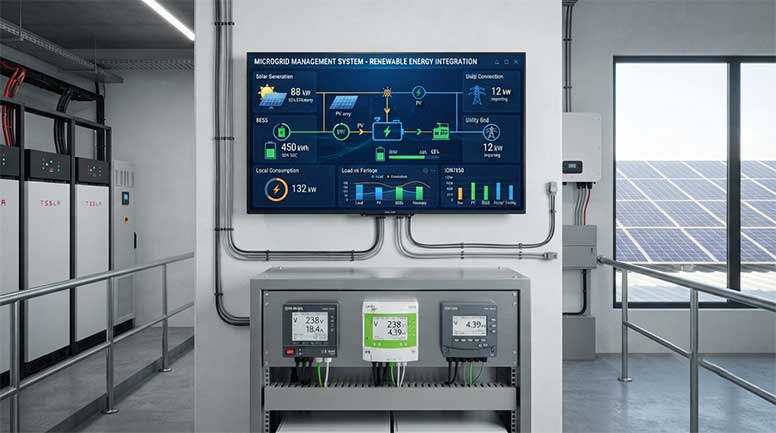
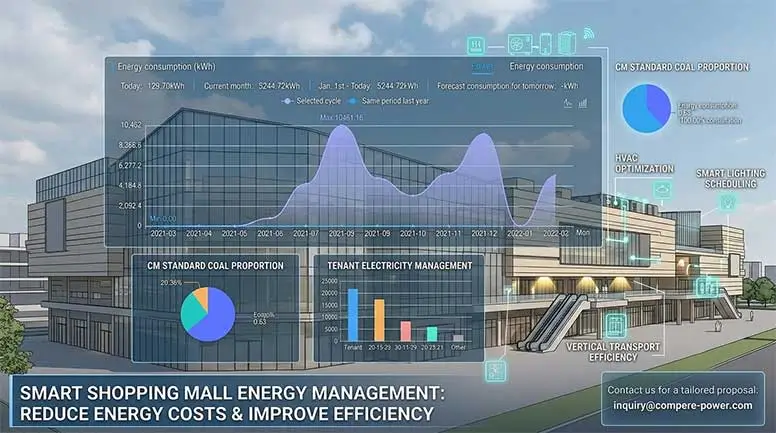
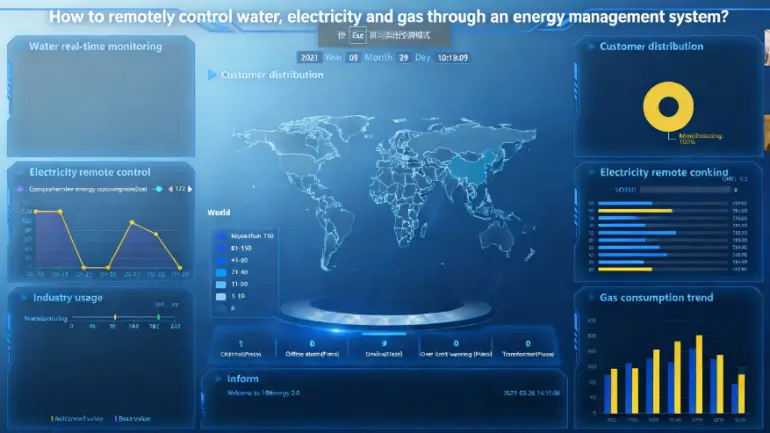
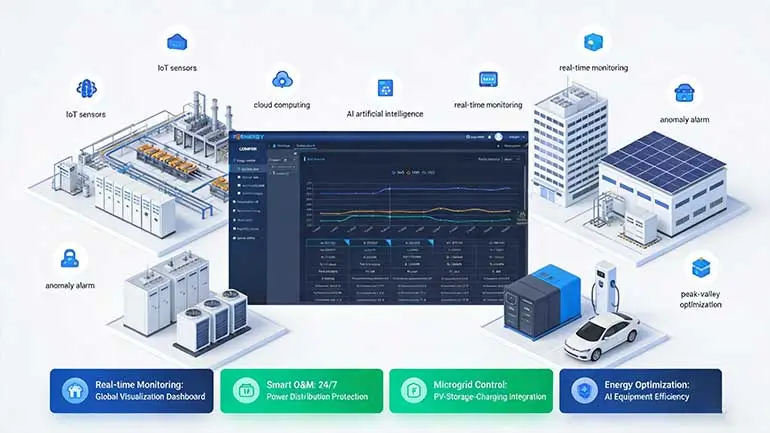
Real-time energy monitoring systems, by installing smart sensors on critical circuits and equipment, transform energy usage into visualized data every second. It not only transforms your management style but also brings three core shifts:
1. Precise Granularity: Targeting Specific Devices
Instead of looking at the electricity meters for the entire building, you can focus on a specific chiller unit, a production line, or even a particular server rack. The system instantly identifies where energy consumption anomalies are occurring.
2. Operational Transparency: Rejecting Blind Guessing
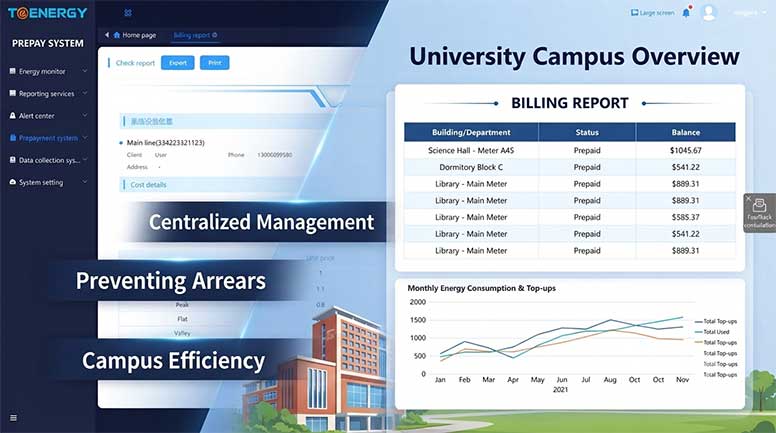
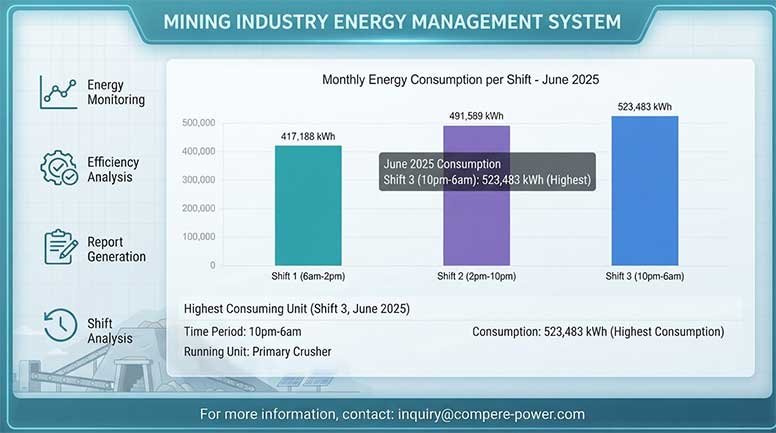
Through intuitive data dashboards, management can clearly see the office's electricity consumption at 3 AM or the power consumption of a specific machine under idle conditions, allowing management decisions to be based on real data, not guesswork.
Introducing a new system often comes with concerns about return on investment (ROI). However, the unique feature of a real-time energy monitoring system is its extremely short payback period. Here's the financial logic behind its ability to recoup its costs in just 6 months:
Months 1-2: Reaping the "Low-Hanging Fruit" (Cost-Free Optimization)
Through data from the first few weeks after system launch, companies can usually immediately identify obvious management loopholes.
Action: Adjust automation control schedules to ensure unnecessary lighting, ventilation, and office equipment are completely shut off during non-working hours.
Financial Impact: These zero-cost management adjustments can immediately help businesses reduce energy bills by 5% to 15%.
Months 3-4: Eliminating Peak Demands and Optimizing Operations
Utilizing accumulated data, businesses begin deeper optimization.
Action: Stagger the startup times of high-energy-consuming equipment to avoid multiple high-power devices operating simultaneously; perform targeted maintenance on underperforming HVAC or manufacturing equipment based on real-time energy consumption anomalies.
Financial Impact: Effectively reduce "peak demand penalties" while avoiding production downtime losses due to sudden equipment failures.
Months 5-6: Behavioral Change and Cultural Accumulation
The transparency brought by data begins to impact the entire company.
Action: Real-time data not only allows management to see the results but also serves as a basis for employee energy-saving competitions; combined with intelligent control systems, achieve automated and refined energy consumption management.
Financial Impact: Energy savings are solidified, typically reducing overall enterprise energy consumption by 20% to 30%. At this point, the saved electricity/energy costs fully cover the system's hardware and software installation costs.
Example:
Assume a medium-sized manufacturing company or commercial complex has a monthly electricity bill of 100,000 yuan.
By introducing real-time monitoring and optimization, a conservative estimate of a 20% reduction in energy consumption translates to monthly savings of 20,000 yuan.
The deployment cost of an efficient real-time monitoring system is likely between 80,000 and 100,000 yuan (including sensors, software subscriptions, and installation).
Calculation Results: By the 4th or 5th month, the accumulated savings have already offset the investment cost. From the 6th month onwards, every penny saved will directly translate into net profit for the company.
In the wave of digital transformation, continuing to be "blind" to a company's energy consumption is not only a financial dereliction of duty but also a weakening of its competitiveness.
Real-time energy monitoring systems are no longer a luxury only Fortune 500 companies can afford; they are an essential tool for any company looking to optimize operating costs and fulfill its ESG (Environmental, Social, and Governance) responsibilities. Stop paying for waste, starting with seeing where every kilowatt-hour of electricity flows.
If you would like to learn how real-time energy monitoring systems can be precisely tailored to your industry and building type, please contact our expert team to obtain a customized energy audit and ROI forecast report.
Have you any problem, please contact us via message