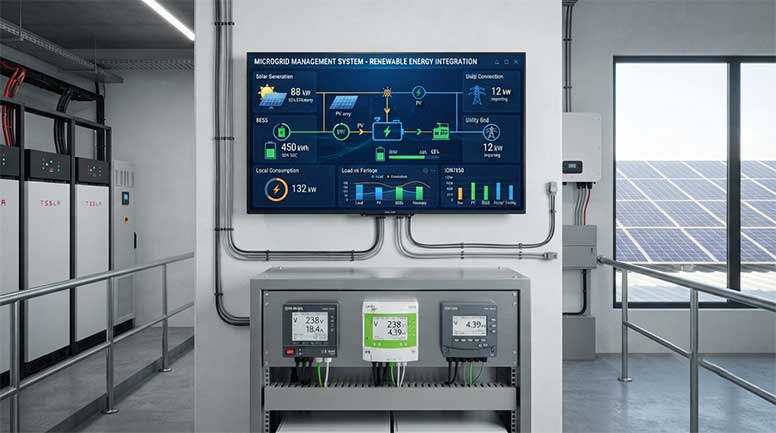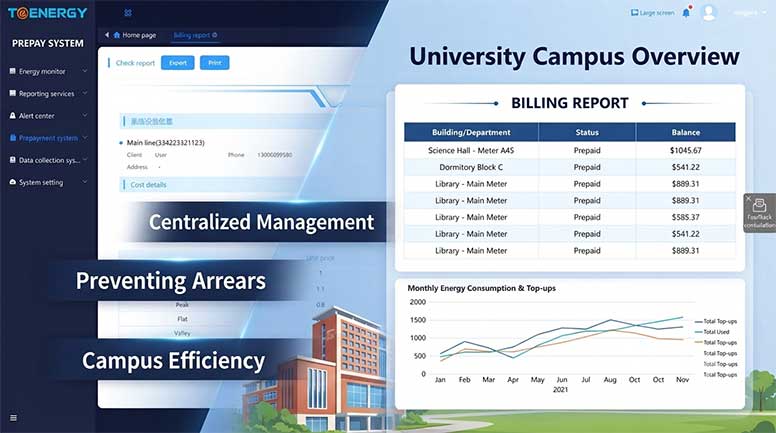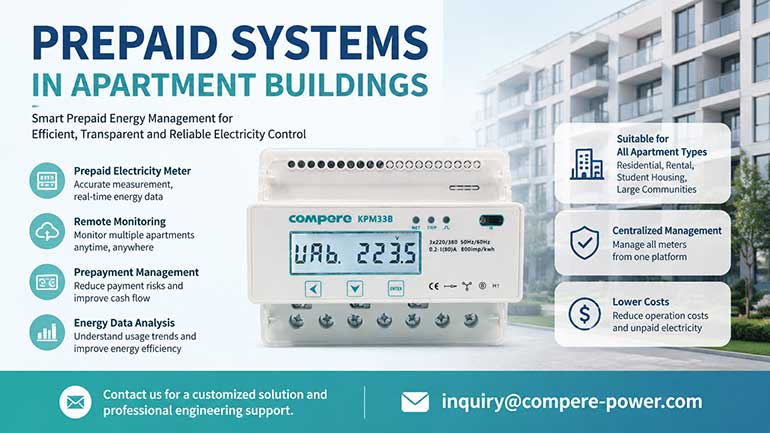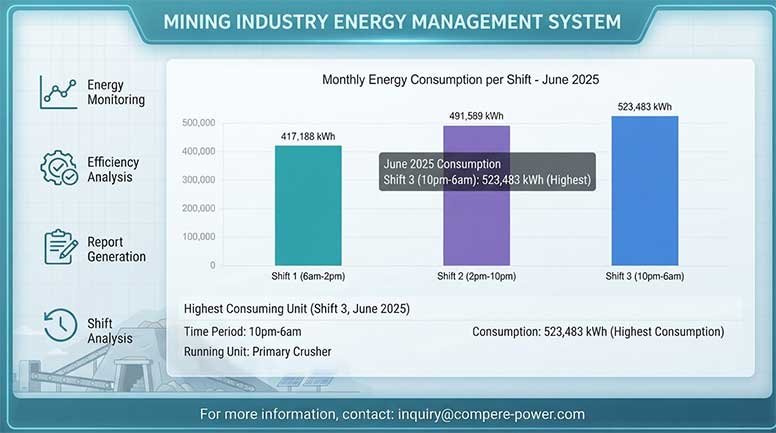


Schools especially universities and large educational campuses, have complex energy demands, encompassing both daily electricity consumption in classrooms and laboratories, as well as peak loads such as air conditioning and dormitory lighting. With the advancement of green and smart campus development, microgrid management systems are becoming a key tool for campus energy management. Introducing microgrid management systems on campus not only saves electricity costs but also provides the infrastructure for creating a "green and smart campus.
Campus electricity consumption is highly time-sensitive (daytime teaching, nighttime dormitories), with significant differences between holidays and the start of semesters. Laboratories and computer rooms require high power supply stability. Small campuses require increasing installed capacity for distributed photovoltaic systems.
Integrate distributed photovoltaic systems with energy storage to prioritize green energy. Optimize peak and valley power dispatching based on load forecasting based on electricity usage patterns. Provide energy consumption analysis reports to help schools develop energy-saving strategies. Emergency power supplies ensure power supply to critical areas, such as laboratory buildings and computer rooms.
The university installed 3MW of photovoltaic power on the rooftops of teaching buildings and dormitories, along with a 1.5MWh energy storage system. After implementing a microgrid management system, photovoltaic power directly supplies the teaching buildings and laboratories during the day, while energy storage batteries release power to supply the dormitories at night.

The proportion of photovoltaic power directly supplying the teaching buildings during the day increased from 55% to 88%;
The peak-valley electricity pricing strategy resulted in annual electricity savings of approximately 1.1 million yuan;
Energy efficiency analysis reduced peak dormitory electricity consumption by 18%, and air conditioning system optimization reduced annual electricity consumption by approximately 7%.
The system also piloted a "seamless handover" solution in the research computer room: in the event of a utility power failure, energy storage takes over in less than 1.5 seconds, ensuring uninterrupted critical experiments and avoiding equipment and research time loss.
Initially conduct three months of baseline energy consumption monitoring, then gradually implement forecasting and automated scheduling modules; Develop differentiated strategies for teaching buildings, dormitories, and computer rooms; Retain manual intervention portals and visual reporting to facilitate future expansion and policy submissions.
For universities, microgrid management systems offer both direct cost recovery and long-term, scalable value as part of university-enterprise collaboration, green demonstration, and research platforms. They provide universities with intelligent, low-carbon, and secure energy solutions, serving as a crucial support for building smart campuses.
Have you any problem, please contact us via message