
Under the dual pressures of the 2026 "dual carbon" targets and the transformation to a new power system, the survival space for high-energy-consuming enterprises is being continuously squeezed. High electricity bills, peak electricity price penalties, and difficulties in carbon footprint tracking… these core pain points for industrial users are eroding the already meager profits of manufacturing enterprises.
The traditional "end-of-month bill review" model is completely ineffective. Are you also facing the following dilemmas:
Data Silos: The EMS on the production line is disconnected from electricity and gas meter data, making it impossible to calculate the true energy consumption cost of individual products.
Belated Discovery: Abnormal overloads or leakage in equipment are only discovered when the machine is shut down or a huge electricity bill is received.
Integration Bottlenecks: Faced with outdated Modbus electricity meters and newly purchased OPC UA protocol devices, you don't know how to unify their integration with the Industrial Internet of Things (IIoT) platform.
This article will thoroughly break down the entire process of integrating an Industrial Internet of Things (IIoT) platform and implementing an IoT-based energy monitoring system, helping enterprises to connect data, understand energy consumption, and precisely reduce costs.
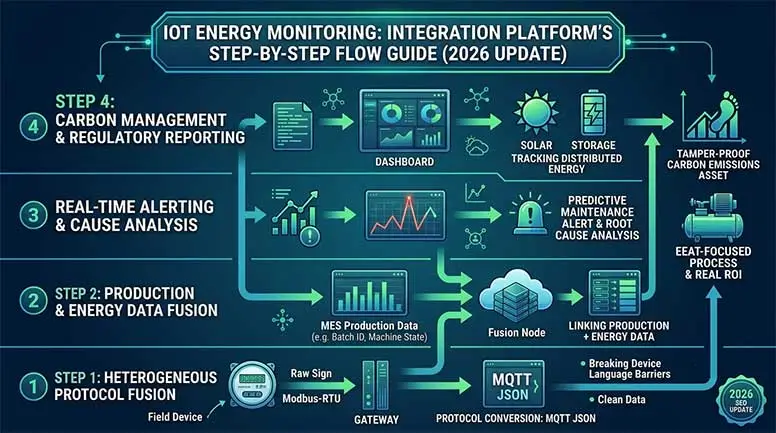
Achieving efficient energy monitoring is not simply about buying a few smart meters. It relies on a three-layer IIoT platform integration architecture.
1. Edge Data Acquisition Layer
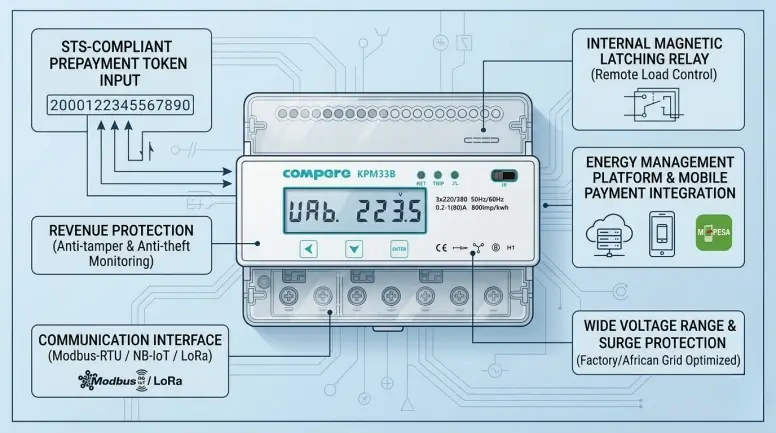
This is the system's "tentacle." By installing smart gateways with IoT capabilities, it collects various energy data such as electricity, water, gas, and heat within the factory in real time.
2. Network Transmission and Platform Layer
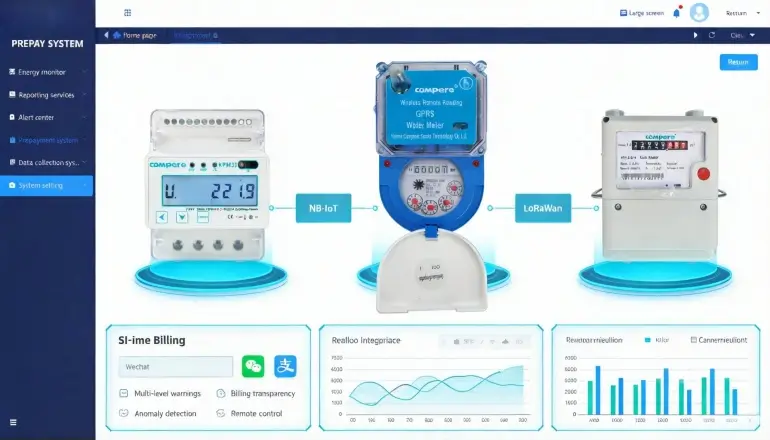
The edge gateway transmits encrypted data to the IIoT platform via protocols such as MQTT, 4G/5G, and LoRaWAN. The platform is responsible for cleaning, storing, and building the digital twin (DTL) of massive amounts of data.
3. Application Layer
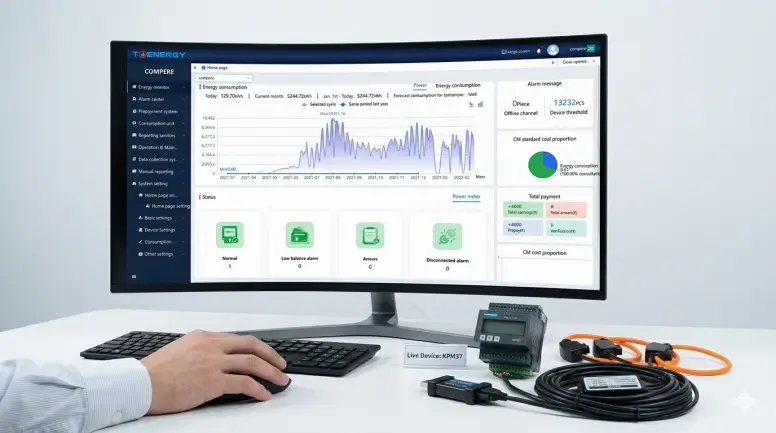
The Energy Management System (EMS) is built based on the platform data. Through visual dashboards and mobile apps, real-time dashboards, energy consumption predictions, anomaly alarms, and carbon footprint analysis are provided to management and operations personnel.
1. Heterogeneous Protocol Integration: Breaking Down Equipment Language Barriers
Factories often coexist with outdated equipment from over a decade ago and the latest digital platforms. The first step in integration is protocol conversion. Utilizing the protocol stack capabilities integrated into the IIoT platform, traditional industrial protocols such as Modbus-RTU and Profibus are uniformly converted into the MQTT JSON format suitable for cloud transmission.
2. Production and Energy Consumption Data Linkage (Data Fusion)
SEO Expert's Key Takeaway: Isolated energy data is worthless.
True IIoT integration must integrate energy monitoring with production management (MES, ERP). By linking electricity data with product work orders and equipment status, you can accurately analyze:
The difference in unit consumption between shift A and shift B when producing the same product.
How much electricity is wasted when equipment is idle?
3. Real-time Alarms and Energy Efficiency Root Cause Analysis
Utilizing the rule engine of the IoT platform, energy consumption thresholds are set. Once the current of an air compressor abnormally increases (potentially indicating filter blockage or bearing wear), the system immediately triggers an alarm via WeChat and SMS, shifting from "post-event accountability" to "pre-event predictive maintenance."
Eliminating Reactive Power Waste (Cost Reduction of 15%-30%): Automatically identifies equipment idling and pipeline leaks, optimizing off-peak production scheduling.
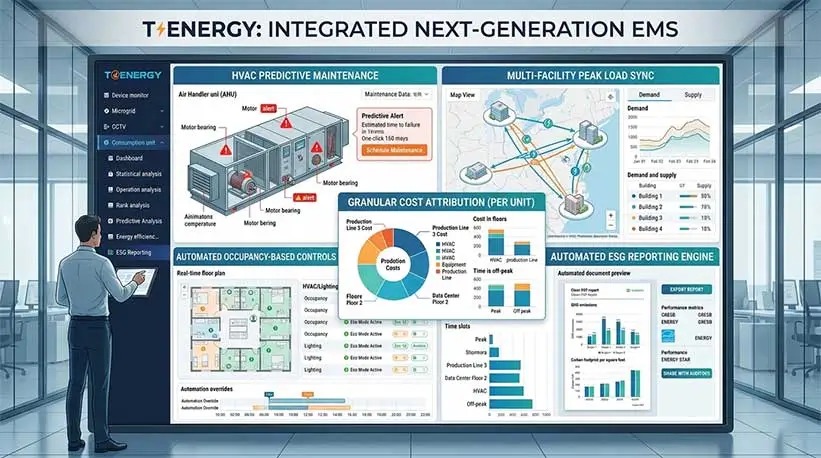
Refined Cost Accounting: Directly allocates energy costs to workshops, work teams, and even individual batches of products, making financial accounting more accurate.
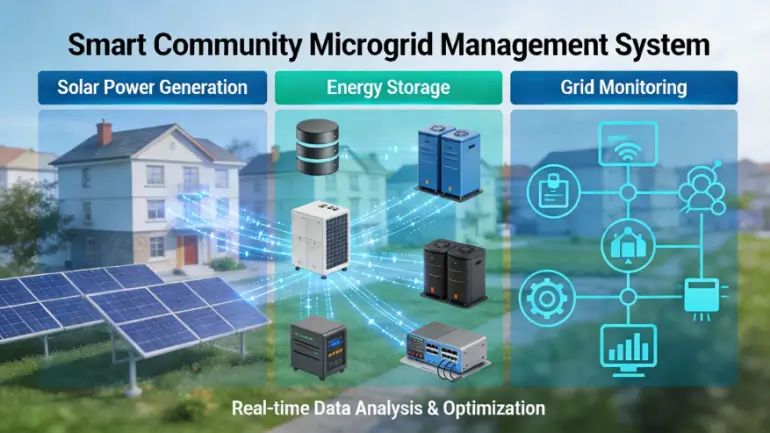
Support for Green Electricity and Carbon Management: Real-time statistics on the charging and discharging status of distributed photovoltaic power generation and energy storage stations provide enterprises with tamper-proof IoT data assets for compliant carbon emission reporting (the most valued authentic evidence in the EEAT era).
Q1: Our factory uses equipment from over a decade ago. Can we still integrate IoT energy monitoring?
A: Absolutely. This is a "non-intrusive retrofit." We don't need to modify the control logic of your existing equipment. We only need to install open-type current transformers (CTs) and smart IoT meters in the distribution cabinet. This allows for asynchronous data collection and uploading to the IIoT platform without affecting production downtime.
Q2: Will high-frequency energy data collection impact the bandwidth of the existing industrial control network (ICN)?
A: No. Excellent integration essentially relies on "edge computing." The gateway preprocesses the data on-site (e.g., collecting data every 5 seconds, but only uploading the average value every minute when the data changes significantly), thus greatly saving network bandwidth and ensuring the security of the production control network (OT).
Q3: With so many industrial IoT platforms on the market, how should companies choose?
A: The selection process mainly considers three indicators: protocol support capabilities (whether it comes with a rich library of industrial protocols), system integration openness, and data security and compliance.
<script type="application/ld+json"> { "@context": "https://schema.org", "@type": "FAQPage", "mainEntity": [ { "@type": "Question", "name": "Our factory uses equipment from over a decade ago. Can we still integrate IoT energy monitoring?", "acceptedAnswer": { "@type": "Answer", "text": "Absolutely. This is a \"non-intrusive retrofit.\" We don't need to modify the control logic of your existing equipment. We only need to install open-type current transformers (CTs) and smart IoT meters in the distribution cabinet. This allows for asynchronous data collection and uploading to the IIoT platform without affecting production downtime." } }, { "@type": "Question", "name": "Will high-frequency energy data collection impact the bandwidth of the existing industrial control network (ICN)?", "acceptedAnswer": { "@type": "Answer", "text": "No. Excellent integration essentially relies on \"edge computing.\" The gateway preprocesses the data on-site (e.g., collecting data every 5 seconds, but only uploading the average value every minute when the data changes significantly), thus greatly saving network bandwidth and ensuring the security of the production control network (OT)." } }, { "@type": "Question", "name": "With so many industrial IoT platforms on the market, how should companies choose?", "acceptedAnswer": { "@type": "Answer", "text": "The selection process mainly considers three indicators: protocol support capabilities (whether it comes with a rich library of industrial protocols), system integration openness, and data security and compliance." } } ] } </script>The first step in digital transformation is understanding every kilowatt-hour of your electricity consumption.
Integrating an Industrial Internet of Things (IIoT) platform is essentially building a "nervous system" for the enterprise. IoT-based energy monitoring is the best entry point for implementation and offers the highest return on investment (ROI). Don't let vague energy bills continue to erode your profits; start your IIoT integration journey now.
Have you any problem, please contact us via message