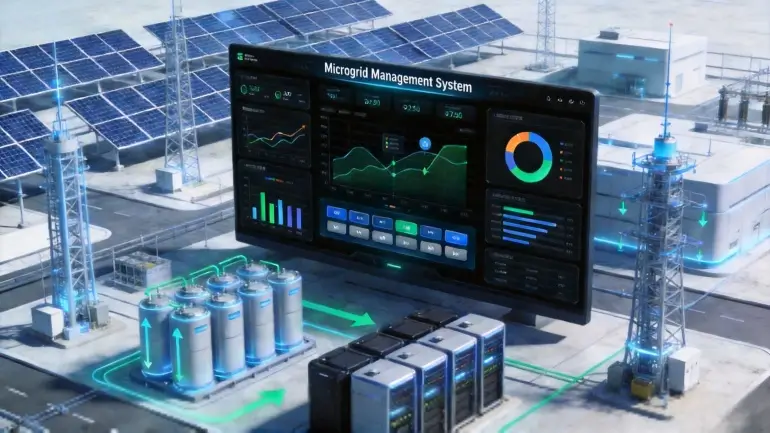
Traditional diesel power generation is costly and environmentally polluting for islands, remote pastoral areas, and remote areas without stable utility power. Microgrids combine photovoltaics, energy storage, and intelligent management to provide a sustainable power supply path for off-grid areas.
Pain Points in Scenario
High fuel transportation costs, difficult equipment maintenance, user habits, and limited local resources.
Key System Design Points
Hybrid Energy Configuration: Hybrid scheduling of photovoltaics + wind power (if resources permit) + energy storage + backup diesel generators.
Localized Operations and Maintenance (O&M) and Remote Monitoring: Simplified O&M interfaces and support remote fault diagnosis and firmware release.
Cost-Benefit Model: Reduces total cost of ownership (TCO) by reducing diesel operating hours and extending equipment life.
Case Study (Island Power Supply Transformation)
Project: Installed 600kW photovoltaics + 720kWh energy storage + one 500kW diesel generator for emergency response.
Results: Diesel operating hours were reduced by 62%, annual fuel costs decreased by 58%, and residential electricity prices were reduced by approximately 35%. After two years of operation, carbon emissions were reduced by approximately 1,200 tons.
Operational Model: The local energy company is responsible for daily maintenance, while the supplier provides remote monitoring and 24/7 support.
Implementation Recommendations
- Conduct a thorough resource assessment (solar, wind, and load profile);
- Adopt a modular design to facilitate expansion and replacement;
- Establish a local training system to ensure basic equipment maintenance can be performed locally.
In off-grid areas, microgrid management systems simultaneously enhance availability, affordability, and environmental friendliness, offering a practical path to sustainable development.