
The renovation of old residential communities is a crucial project for improving the quality of urban living. Among numerous hardware upgrades, power grid renovation and the replacement of old communities with smart prepaid meters are often considered core components with far-reaching consequences. Traditional mechanical meters not only have low metering accuracy and numerous safety hazards, but also impose a huge administrative burden on management. A complete prepaid system derived from prepaid meters is becoming a breakthrough for the digital transformation of old residential communities.
Before the renovation, electricity management in old residential communities typically faced three core challenges:
Difficulty in collecting fees and long collection cycles: The traditional "use electricity first, then read the meter, then pay" model relies on property management personnel manually visiting households or checking public meter boxes. Due to the complex composition of residents (such as frequent tenant changes and vacant properties), difficulties in collecting overdue fees often occur, sometimes even leading to conflicts between property management and homeowners.
Aging power infrastructure hazards: Old lines often cannot support modern high-power appliances. Traditional electricity meters lack overload protection and real-time monitoring functions, making it difficult to prevent fires caused by overheating of wiring.
High management costs: Manual meter reading is not only inefficient but also prone to data entry errors, leading to billing disputes.
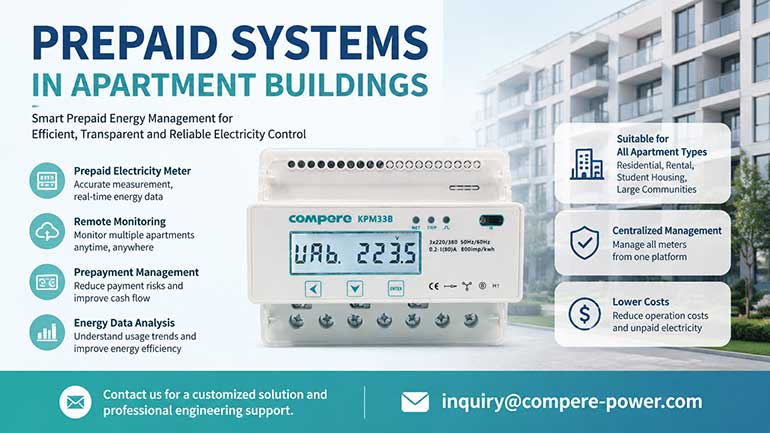
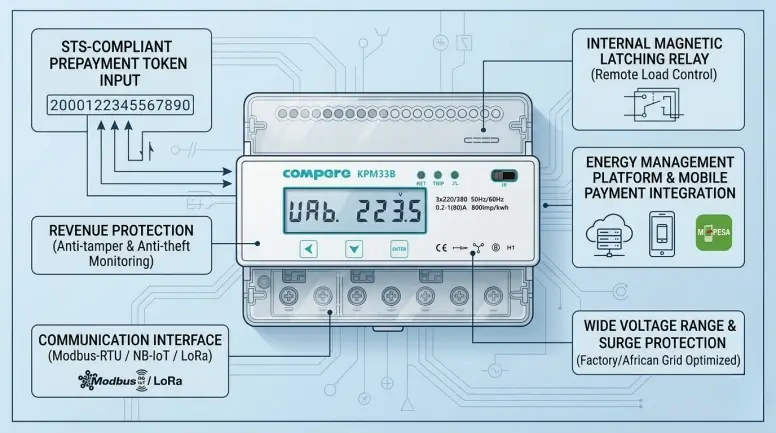
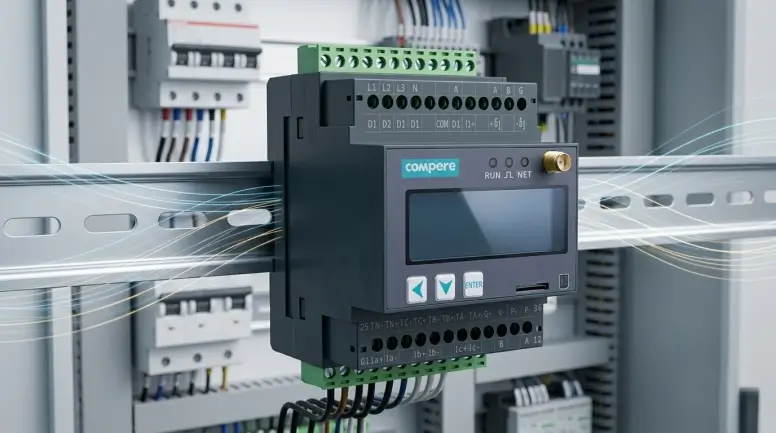
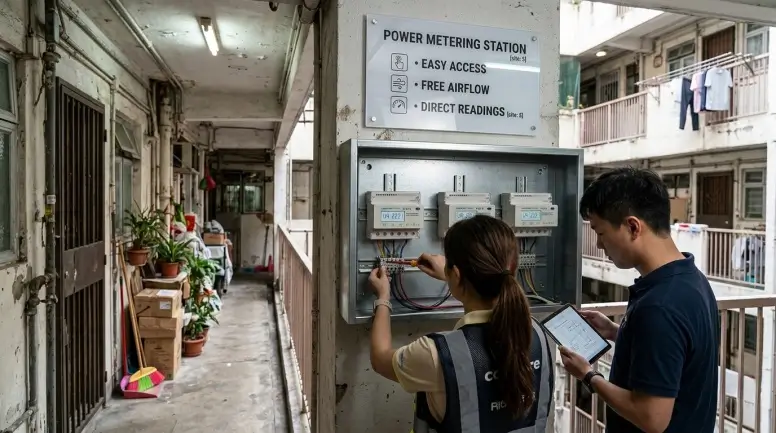
In renovation projects, new prepaid electricity meters (usually smart IoT meters) replace old rotary meters. They are no longer just metering tools but act as sensors and actuators in the system.
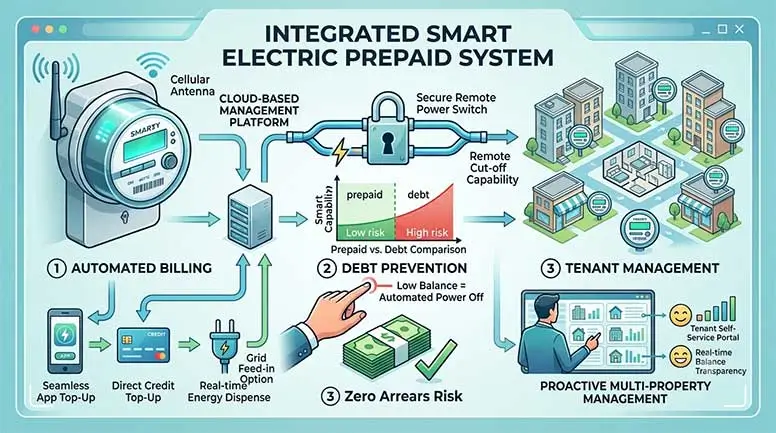
These meters incorporate high-precision metering chips, magnetic latching relays, and communication modules (such as NB-IoT or 4G). Their core mechanism lies in "authorized electricity use": users must purchase electricity in advance through an online platform. The system sends the purchase instruction to the meter, which deducts the balance based on real-time consumption. When the balance reaches a critical value, the meter automatically issues a warning; if the balance is exhausted, the meter automatically trips the circuit breaker via an internal relay.
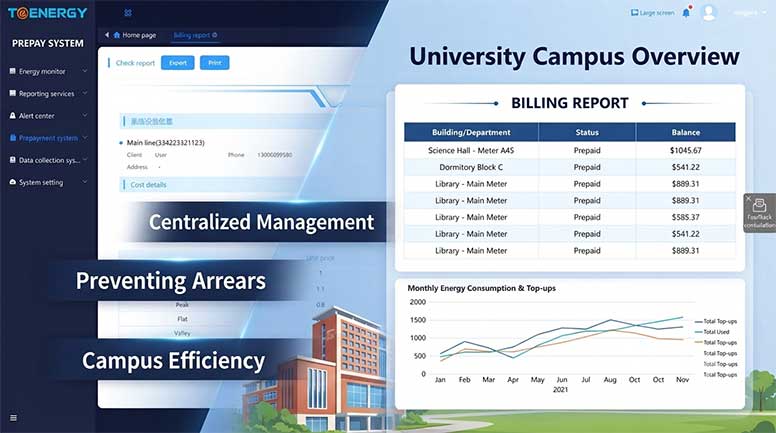
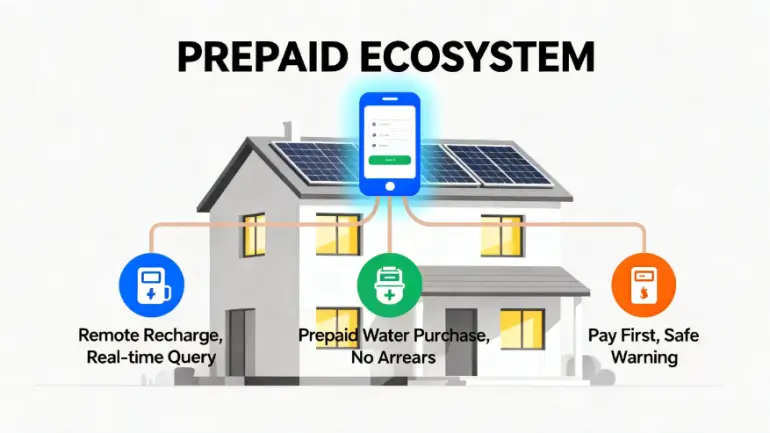
The prepaid electricity meter is supported by a complete smart prepaid management system. In the renovation of old residential communities, the value of this system is reflected in the following dimensions:
The upgraded system completely eliminates the need for "offline electricity purchases." Residents can top up their accounts simply through WeChat mini-programs, Alipay, or the property management app. Funds flow directly into the management account, and electricity is automatically distributed to the meter. The entire process requires no manual intervention, greatly improving residents' convenience.
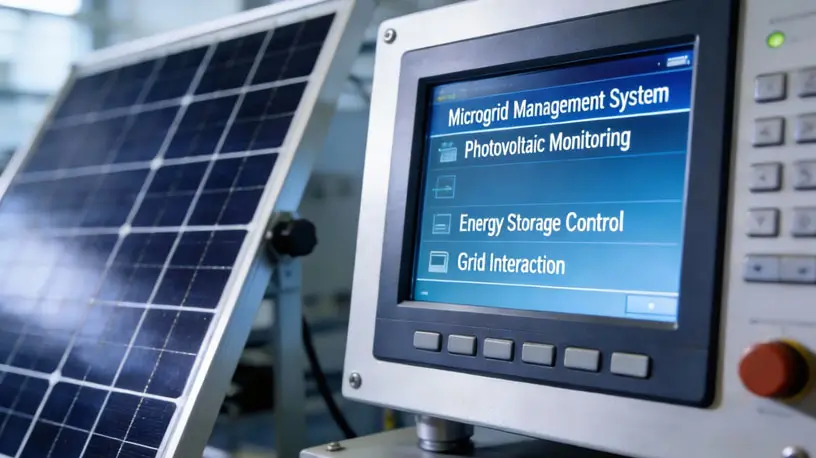
The system backend can monitor the operational status of each terminal in real time. If a resident experiences an abnormal surge in current or a waveform resembling suspected illegal electricity use, the system can automatically trigger an alarm or even execute a protective power cut. This is a crucial safety measure for old communities with many wooden structures or complex wiring.
The prepaid system supports complex billing logic. The system can automatically calculate tiered pricing based on local policies. Meanwhile, many renovation projects have integrated prepaid electricity bills with property management systems, enabling unified account management of property fees, parking fees, and electricity bills, thus helping property management companies improve their overall collection rates.
From the perspective of the long-term development of older residential communities, the introduction of the prepaid system has achieved a win-win situation for all parties:
For residents: transparent payment, the ability to check remaining electricity and energy consumption curves anytime, anywhere, fostering energy-saving awareness.
For property management companies: it alleviates the financial pressure of paying electricity bills in advance, eliminates legal risks caused by arrears, and reduces labor costs.
For urban management: massive amounts of electricity consumption data provide a scientific basis for community profiling, care for elderly people living alone (e.g., triggering alarms due to prolonged lack of electricity), and precise energy scheduling.
The replacement of prepaid electricity meters in the renovation of older residential communities is not a simple equipment upgrade, but a reconstruction of the underlying management model. Using prepaid billing as a starting point, it connects previously isolated physical nodes to the cloud through Internet of Things (IoT) technology, establishing an efficient, transparent, and secure energy management system.
Have you any problem, please contact us via message