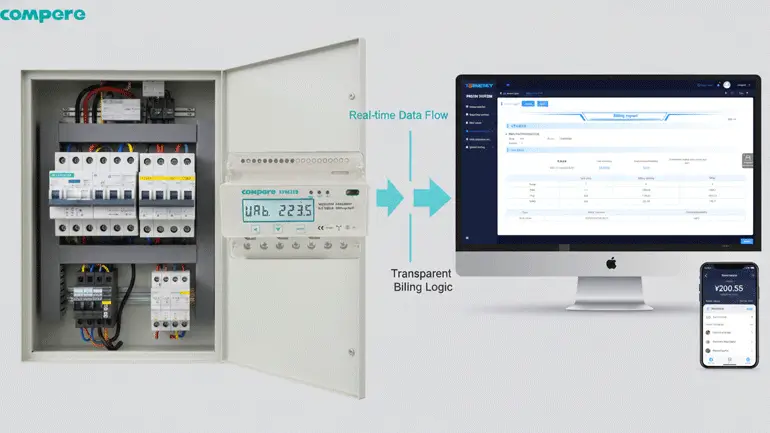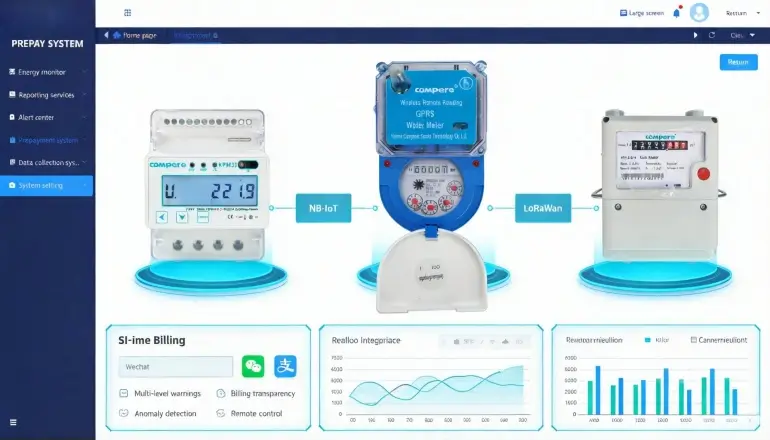

Under the wave of digital transformation, energy management systems (EMS) are evolving from simple energy consumption statistics to complex refined management. As the underlying core of system integration, the performance of smart meters directly determines the data quality of the upper software platform. For integrators, choosing appropriate measurement components is not only to complete the task, but also to reduce post-delivery maintenance costs and enhance the competitiveness of the solution.
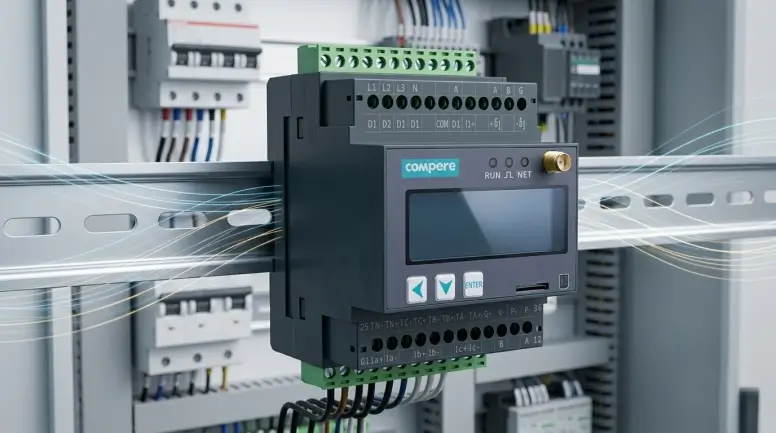
The most common problem encountered by integrators is "protocol barriers". An excellent smart meter should be an "all-rounder" in the field of communications:
Industry standard protocols: Modbus-RTU and Modbus-TCP must be fully supported. This is the common language for most PLCs and energy management systems today.
IoT access capabilities: With the increase in cloud deployment, wireless electricity meters that natively support the MQTT protocol can be directly connected to the cloud platform, eliminating the need for expensive protocol conversion gateways and simplifying the network architecture.
Meter reading specifications: In utility or large-scale campus projects, equipment can ensure interoperability between different brands and different batches.
Integrators' profit margins are often squeezed by cumbersome on-site installation. To this end, hardware design must take into account ease of construction:
Modular rail design (DIN-Rail): Compared with traditional panel meters, standard rail installation can greatly shorten the layout time in the distribution cabinet.
Flexible sampling solutions: Meters supporting Split-core CTs are a "savior" for integrators. The digital transformation of the old power distribution system can be completed without cutting off the power supply of the factory or moving the cables.
Automatic baud rate detection: Simplifies on-site debugging steps and reduces the risk of configuration errors by construction personnel.
Basic electricity meters only provide accumulated power, but integrators need more dimensions of data to support advanced analysis functions:
Real-time full parameter monitoring: including three-phase voltage, current, active/reactive power, power factor, frequency and phase angle.
Harmonic analysis capability: There are a large number of frequency converters in industrial sites. Meters with 31st or higher order harmonic monitoring capabilities can help integrators analyze power quality fluctuations in production lines and prevent equipment damage due to voltage distortion.
Onboard alarm logic: The meter should have local over-limit logic judgment function. Once a voltage sag or current overload occurs, the meter can actively trigger an interrupt signal in milliseconds instead of waiting for system polling.
The industrial site environment is harsh, and the robustness of the meter directly affects the reputation of the integrator:
Wide temperature range and anti-interference: Ensure that the accuracy does not shift in an environment from -25°C to +70°C, and have high-strength EMC (electromagnetic compatibility) anti-interference capabilities to avoid communication packet loss caused by the start and stop of large motors.
Anti-tampering and logging: Locally store key event logs (such as power outage time, parameter modification records) to provide evidence for subsequent accident tracing.
Have you any problem, please contact us via message