
In the modern digital landscape, telecommunications infrastructure forms the backbone of global connectivity. However, maintaining continuous uptime for extensive, geographically distributed networks requires an immense amount of power. Today, energy costs constitute one of the most significant operational burdens for telecom operators, mobile network operators (MNOs), and tower companies alike. As network architectures shift to power-intensive 5G technologies, the integration of a specialized Telecommunications Industry Energy Management System has transitioned from an environmental initiative to a core operational necessity.
Understanding the fundamental pain points in telecom power distribution and site operation is crucial to achieving sustainable efficiency. Telecom operators manage critical physical networks under harsh, unpredictable conditions, facing several distinct energy challenges:
Unlike traditional commercial installations, telecom sites operate around the clock with zero tolerance for downtime. Base stations and remote transceivers run continuously to ensure seamless user connectivity. This persistent load is compounded by active cooling equipment (air conditioners and ventilation systems) required to protect sensitive transceiver electronics from overheating. Furthermore, the global rollout of 5G infrastructure has drastically heightened power requirements. 5G active antenna units (AAUs) consume up to three times more electricity than their 4G LTE predecessors, heavily inflating utility overheads.
Telecom infrastructure is characterized by extreme geographical distribution. A single operator or tower company may manage thousands of remote telecom towers, base stations, and rooftop sites scattered across urban hubs, rural plains, and mountainous terrain. Many of these locations are completely unattended. This fragmentation makes physical site audits and traditional utility meter verification highly impractical. Relying on manual inspections results in enormous maintenance workloads, high transportation expenses, and delayed response times when failures occur.
Traditional mechanical sub-meters and manual billing processes offer zero real-time visibility. Operators often receive bulk utility bills weeks after consumption occurs, leaving them blind to specific consumption patterns. Without granular, real-time data, it is impossible to identify which subsystems (such as RF equipment, cooling, or auxiliary backup power) are wasting energy, nor can operators easily detect power quality anomalies, phase imbalances, or phase losses before they damage equipment.
Operating in a competitive telecom market requires lean financial structures. Manual inspection schedules, undetected site energy leakage, inefficient thermal settings, and excessive fuel use in back-up diesel generators collectively drive up operational and maintenance (O&M) expenditures. Telecom infrastructure companies must transition to digitalized energy tracking to eliminate these hidden administrative and manual maintenance leakages.
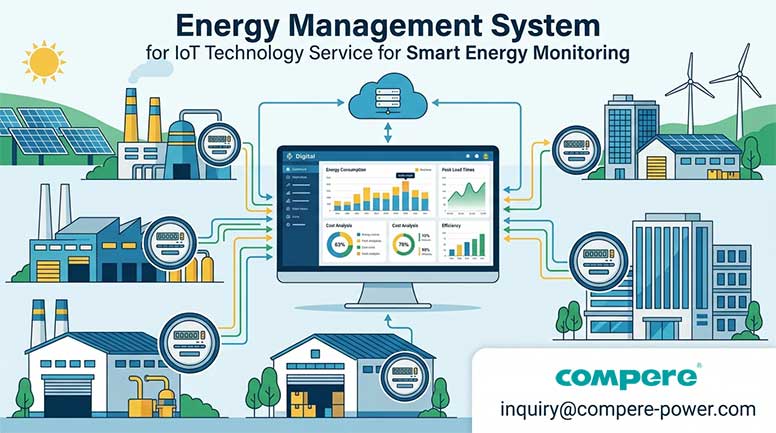
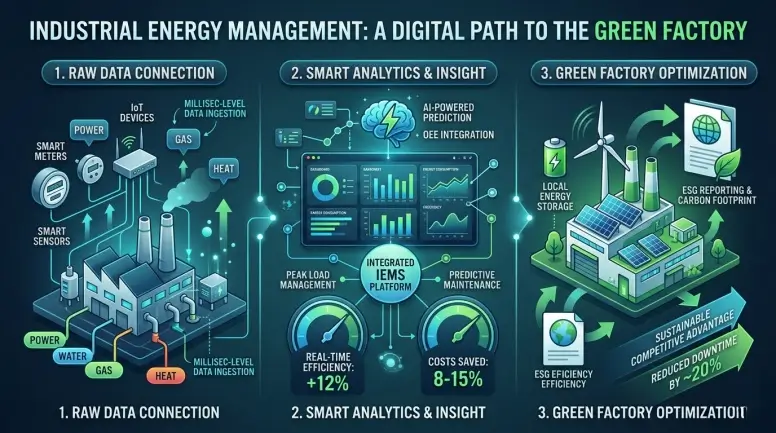
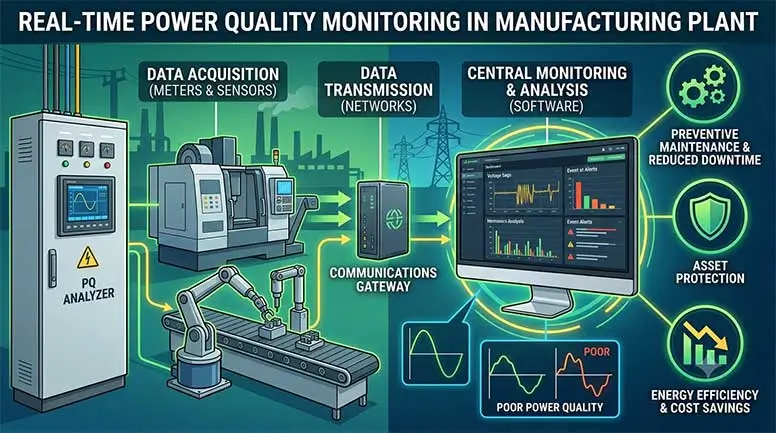
An enterprise-grade Telecom Energy Management System leverages a highly synchronized three-tiered architecture: Smart Energy Meter + IoT Communication + Energy Management Platform. This architecture ensures complete transparency from physical wire to cloud-based dashboard.
At the physical layer, a specialized Smart Energy Meter for Telecom Industry is deployed at each site's distribution board. Unlike standard residential meters, these multi-circuit meters are designed to monitor multiple AC and DC feeds simultaneously. This allows the system to independently isolate and track the power draw of the main utility grid, backup diesel generators, local solar arrays, individual telecom tenant racks, and active cooling units. The meters measure critical parameters including voltage, current, active power, reactive power, power factor, and total kilowatt-hours (kWh).
To eliminate manual site visits, the gathered electrical data must be transmitted instantly. High-performance IoT communication modules and smart gateways interface with the meters. These units securely package and transmit raw parameters via robust network protocols. By utilizing flexible physical layers, the system guarantees uninterrupted data transmission from even the most remote, unattended locations back to a centralized server.
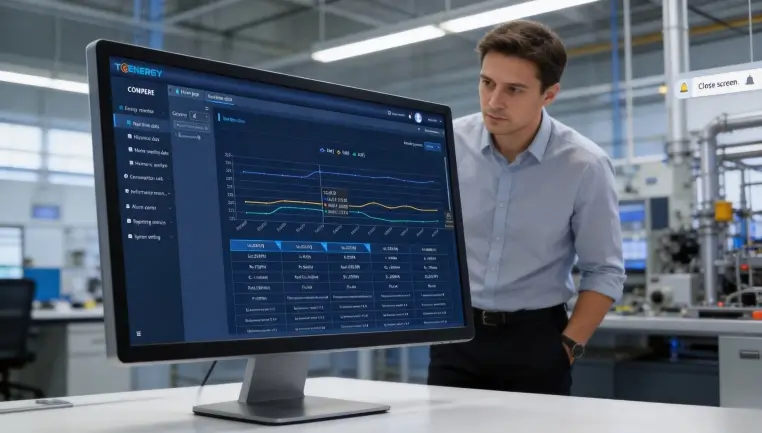
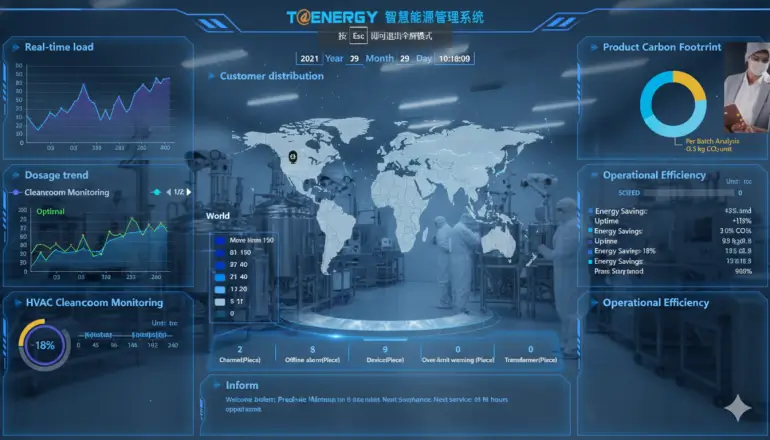
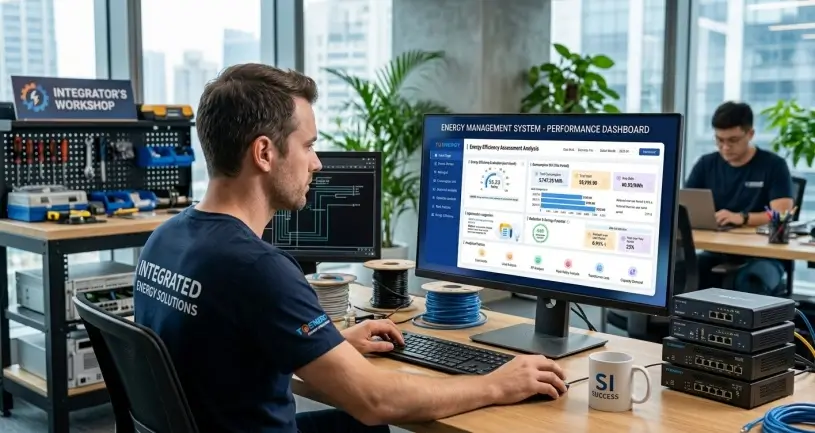
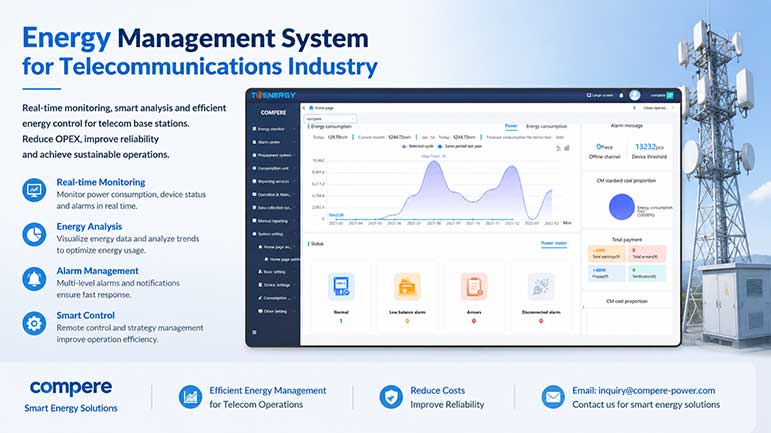
The centralized cloud-based platform functions as the brain of the operation. It automatically aggregates data packets sent from thousands of distributed sites. The platform features intuitive, centralized dashboards that visualize real-time power metrics, compile automated historical consumption reports, and run predictive diagnostics. Operators can instantly cross-examine energy efficiency across different regions, identify anomalies, and receive automated alarms for power supply outages or abnormal usage spikes.
Implementing a comprehensive Telecom Energy Management System yields significant operational upgrades across a variety of specific infrastructure assets:
In mobile communications, base stations represent the highest cumulative energy cost. Deploying a dedicated Base Station Energy Management Solution enables real-time monitoring of electricity consumption. It separates the power load of critical telecom equipment from comfort-cooling units. By mapping temperature curves against cooling power draw, operators can optimize air conditioner setpoints remotely, ending the costly practice of over-cooling empty cabins.
For independent telecom tower companies (TowerCos) hosting multiple mobile network operators on a single structure, accurate power tracking is essential. A dedicated Telecom Tower Energy Monitoring setup allows tower operators to accurately sub-meter the energy consumed by each individual tenant's equipment. This ensures transparent, auditable billing for shared power resources, minimizing disputes and improving tenancy margins.
The high density and thermal load of 5G hardware require aggressive efficiency management. Integrating intelligent power-saving strategies based on network traffic patterns becomes achievable when real-time energy usage is mapped. During low-traffic off-peak hours (e.g., late night), the system provides the telemetry necessary to support automated software sleep-modes for specific 5G carriers, balancing network availability with massive power savings.
Central communication rooms and edge computing facilities are highly concentrated power hubs. Multi-circuit smart energy meters track Power Usage Effectiveness (PUE) continuously. This ensures that facility managers can monitor utility health, maintain power quality, and prevent localized overloads in critical server racks.
A robust energy solution must combine high hardware reliability with scalable, open software tools. The key components of an industry-leading platform include:
Investing in a modern Telecom Infrastructure Energy Management program generates clear financial, operational, and sustainability rewards:
| Solution Value | Business Impact & ROI |
|---|---|
| Remote Energy Monitoring | Drastically reduces manual inspection workloads and fleet travel costs by substituting physical audits with real-time digital telemetry. |
| Energy Data Analysis | Identifies structural energy waste, optimizes HVAC cooling setpoints, and flags underperforming back-up systems to reduce total utility bills. |
| Centralized Multi-Site Management | Improves multi-site operational control, accelerates response times to power faults, and ensures reliable uptime across the entire network. |
| Accurate Sub-Metering | Enables tower companies to bill multi-tenant MNOs precisely for their actual power usage, eliminating billing disputes and improving margins. |
Selecting a partner to deploy critical energy management technology requires rigorous evaluation across several key capabilities:
Industrial telecom environments are electrically noisy and logistically complex. Partner with a provider that possesses proven experience in major telecom deployments, understanding the specific environmental tolerances, electrical profiles, and mounting limits unique to base station environments.
Avoid vendors that only supply isolated software or raw hardware. A successful deployment demands a cohesive, end-to-end provider capable of supplying matching high-accuracy smart meters, ruggedized IoT communication modules, and a fully compatible, scalable cloud management platform.
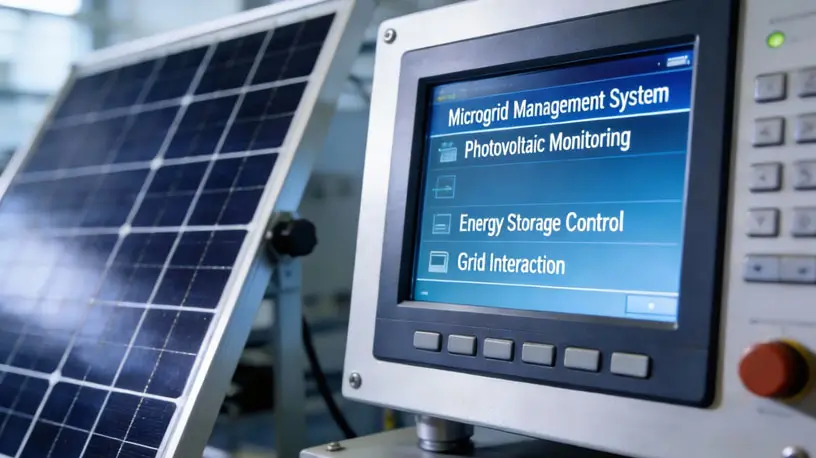
Every telecom network is built differently, featuring a mix of legacy equipment, solar microgrids, and diesel generators. Your provider must offer flexible hardware form factors (such as split-core current transformers for hassle-free retrofits) and adaptable software dashboards tailored to your internal O&M workflows.
Enterprise-scale rollouts require sustained engineering backup. Choose a provider offering deep technical support, comprehensive installation guidelines, remote configuration assistance, and responsive post-sale engineering services.
As a professional manufacturer of high-precision smart energy meters and integrated monitoring hardware, we specialize in delivering comprehensive, end-to-end Telecom Site Power Monitoring and energy management systems. Our hardware is engineered for high electrical noise environments, ensuring reliable performance within busy telecom enclosures. Combined with our industrial-grade IoT communication solutions and highly customizable cloud software, we empower global telecom operators, MNOs, and tower companies to visualize energy consumption, optimize operating costs, and secure network reliability. From initial site audit through to hardware commissioning and software integration, our dedicated engineering team ensures a seamless rollout tailored to your infrastructure requirements.
Have you any problem, please contact us via message