
For modern commercial real estate operators, controlling overhead costs while maintaining a premium, comfortable environment for visitors is a constant operational challenge. Among these expenses, electrical utility bills represent one of the largest controllable operational expenditures. Large-scale retail facilities operate as high-density energy environments, running heavy-duty climate control loops, extensive architectural lighting, and hundreds of individual tenant spaces simultaneously.
Without a centralized shopping mall energy management system, facility management groups are forced to operate reactively, reviewing aggregate utility bills weeks after the energy has already been consumed and wasted. Implementing a digital, data-driven approach to commercial building energy management shifts operations from reactive troubleshooting to predictive optimization, providing property managers with the granular visibility required to identify inefficiencies and control budgets.
Shopping centers are complex commercial ecosystems that experience fluctuating occupancy patterns across extended operating hours. To sustain high tenant satisfaction and foot traffic, a massive electrical infrastructure must operate continuously behind the scenes:
Traditional facility management relies on manual inspections or macroscopic monthly utility data, leaving building operators blind to daily consumption anomalies. This lack of transparency leads to severe operational pain points:
Deploying a dedicated building electricity monitoring system mitigates these risks, turning raw consumption data into actionable cost-reduction strategies.
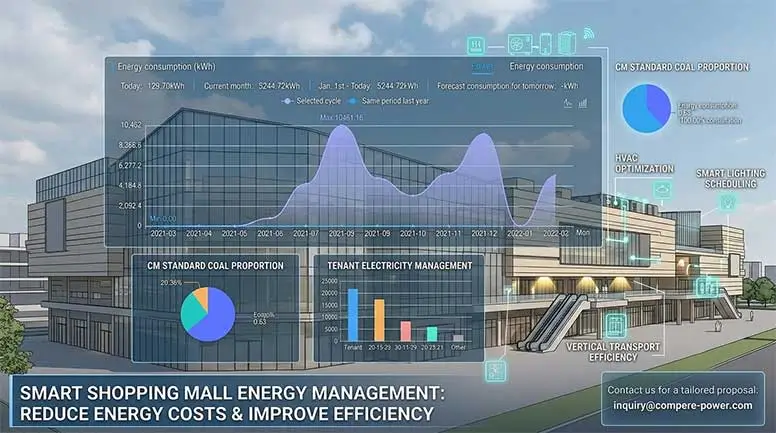
Systemic energy optimization requires mapping consumption profiles across specific functional zones. Utilizing targeted retail building energy monitoring allows management teams to isolate waste across the following core areas:
Heating, Ventilation, and Air Conditioning (HVAC) systems represent the single largest electrical load in commercial retail, frequently consuming 40% to 50% of the total building power. By utilizing localized power profiling, facility managers can track HVAC electricity consumption relative to external ambient temperatures and indoor foot traffic. The data allows engineers to identify abnormal operations—such as chillers running on high stages during low-occupancy morning hours—and adjust baseline running schedules accordingly. Continuous energy monitoring helps facility managers understand HVAC energy performance, shifting the facility toward dynamic, load-dependent climate control.
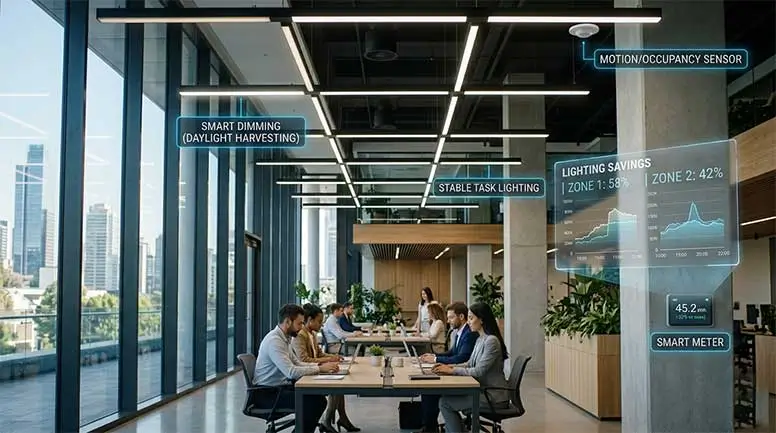
A shopping center's visual appeal depends heavily on its lighting infrastructure, from decorative interior atriums to external parking decks. However, keeping these high-power circuits fully energized during non-operating hours erodes profit margins. Smart energy management monitors circuit-level consumption across distinct zones, enabling operators to identify excessive usage. Property teams can use these insights to optimize lighting schedules, transitioning to low-consumption safety lighting configurations post-closing or integrating automated dimming cycles that react to natural daylight levels.
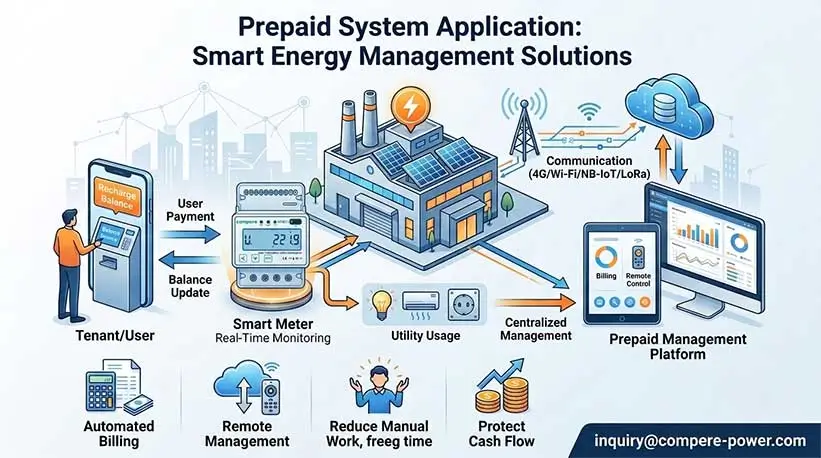
Sub-billing transparency is a frequent source of friction between mall operators and commercial tenants. Diverse business models—such as a low-draw clothing boutique versus a high-draw commercial bakery—require independent evaluation. A robust shopping mall power monitoring system measures individual tenant electricity usage continuously. This eliminates billing disputes by introducing transparent, consumption-based invoicing. Furthermore, it allows management to compare energy consumption baselines among similar tenants, helping operators pinpoint businesses running inefficient machinery overnight and enforce building sustainability policies.
Vertical transport systems must be available to handle peak weekend traffic, but running them at constant speed during quiet weekdays wastes significant power. Capturing real-time load and current profiles across transport circuits allows engineering teams to understand operating patterns. Property managers can leverage this data to implement demand-responsive controls, optimizing operation schedules and allowing escalators to enter low-speed standby cycles when no passengers are present to lower standby energy consumption.
Anchor tenants, such as supermarkets and specialized cold-storage facilities, run continuous refrigeration loops that require uninterrupted power. Because a failing compressor or compromised thermal seal draws significantly more current before completely breaking down, continuous energy monitoring acts as an early warning system. Tracking these dedicated sub-panels helps maintenance teams detect abnormal consumption instantly, preventing expensive inventory loss and avoiding sudden spikes in utility billing.
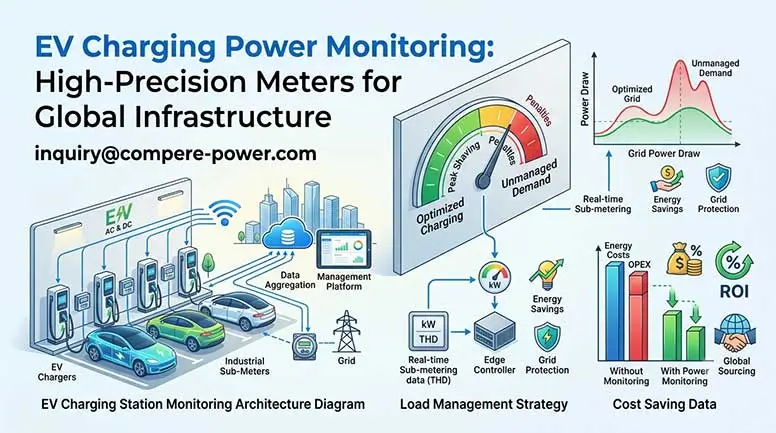
Parking facilities require continuous safety illumination and heavy-duty induction fans to regulate carbon monoxide levels. Furthermore, the rise of EV charging stations introduces highly volatile electrical loads to the facility grid. Smart monitoring systems track these dynamic demands, enabling managers to schedule ventilation cycles based on actual air-quality thresholds and manage EV charging distribution to prevent facility-wide peak-demand penalties.
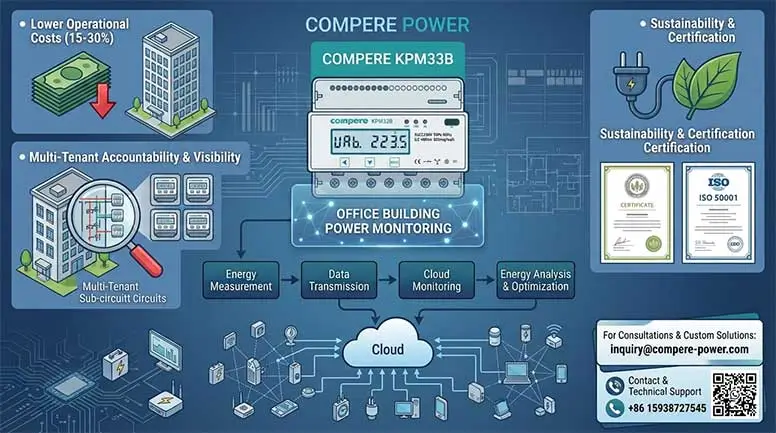
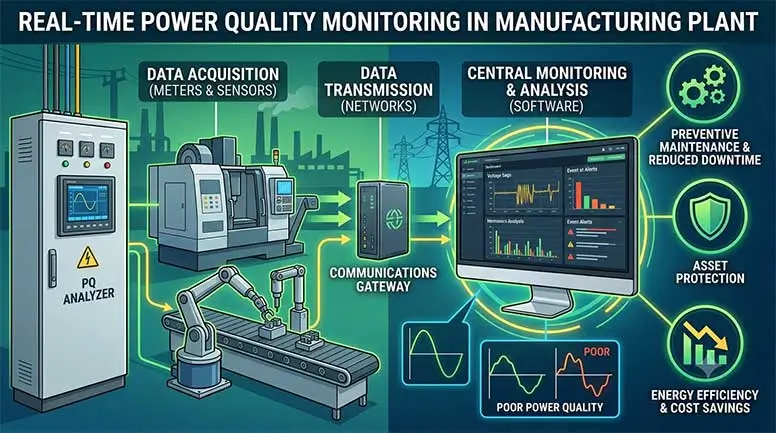
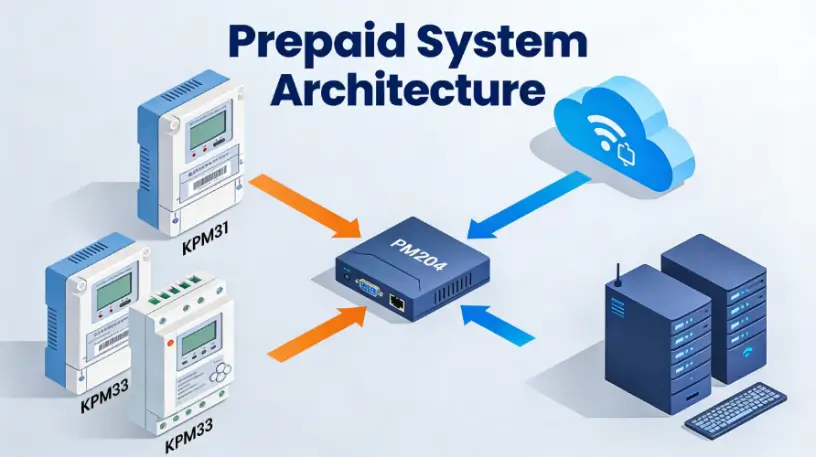
Achieving granular control over a multi-story retail property requires an integrated data-collection loop. A commercial IoT energy management system functions via a reliable, industrial-grade data architecture:
Translating data transparency into bottom-line savings requires targeted operational adjustments. The matrix below outlines the primary saving vectors unlocked by sub-metering data:
| Energy Area | Energy Saving Opportunity | Operational Action via System Data |
|---|---|---|
| HVAC System | Optimize operation schedules and reduce unnecessary cooling | Align chiller plant stages and AHU variable speed drives with real-time occupancy curves and seasonal foot traffic data. |
| Lighting System | Improve lighting efficiency and avoid excessive usage | Establish automated multi-tiered lighting schedules, reducing common area illumination instantly during non-retail hours. |
| Tenant Electricity | Monitor consumption differences and improve transparency | Deploy automated sub-metering networks to allocate exact costs to high-load tenants and incentivize conservation. |
| Escalators & Elevators | Analyze operation patterns and reduce standby energy | Program vertical transit equipment to shift into eco-idle or standby modes based on historical low-traffic time blocks. |
| Refrigeration Equipment | Detect abnormal energy consumption | Configure automated baseline alerts to spot failing commercial cooling compressors before catastrophic failure occurs. |
| Parking Facilities | Optimize lighting and charging management | Coordinate ventilation fan run-times with CO sensors and apply load-balancing rules across EV charging grids. |
Investing in an integrated energy saving solution for shopping centers provides immediate commercial and strategic advantages for property portfolios:
A robust B2B energy deployment must balance hardware longevity with software flexibility. Property groups should prioritize the following performance criteria during system procurement:
Q1: How can shopping malls reduce electricity costs?
Shopping malls can reduce electricity costs by using smart sub-metering to capture real-time consumption profiles, allowing facility managers to eliminate off-hours energy waste, align HVAC and lighting outputs with true occupancy demands, and avoid peak utility demand surcharges.
Q2: Which areas consume the most energy in shopping malls?
The HVAC system is the primary consumer, typically accounting for 40% to 50% of a retail facility's total electrical footprint. Common area lighting, architectural facade lighting, and specialized tenant zones (such as restaurants, cinemas, and supermarkets) represent the remaining major loads.
Q3: What equipment is needed for shopping mall energy management?
A complete architecture requires high-precision smart energy meters installed at distribution panels, industrial communication gateways to aggregate and transmit the electrical telemetry, and a centralized, cloud-accessible energy management platform to visualize data and run billing reports.
Q4: Can shopping mall energy management systems monitor multiple areas?
Yes. Modern commercial energy management platforms are engineered explicitly for multi-area monitoring. They allow operators to segment, track, and compare energy metrics across different building zones, multi-level layouts, distinct functional equipment classes, or individual commercial tenants from a single interface.
Optimizing a large-scale commercial property requires industrial-grade reliability and deep hardware engineering expertise. We specialize in manufacturing high-precision smart energy meters, secure communication gateways, and intelligent energy management platforms engineered to withstand dense commercial distribution environments. By controlling the entire value chain from hardware production to cloud analytics, we eliminate integration hurdles, delivering seamless sub-metering, accurate tenant billing modules, and actionable energy diagnostics that protect your property's net operating income.
Whether you are upgrading an existing retail property or developing a new commercial complex, our application engineers can provide customized hardware topologies, tailored software configurations, and direct technical guidance to support your energy conservation objectives. To discuss your project parameters, secure a tailored on-site equipment layout, or schedule a comprehensive system demonstration with our engineering team, reach out directly to us at [email protected].
Have you any problem, please contact us via message