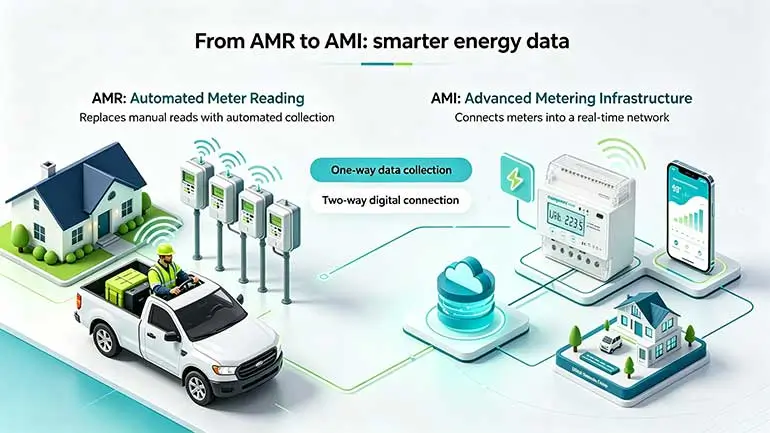

Managing utility distribution across multi-tenant properties, industrial zones, or sprawling residential complexes comes with significant operational hurdles. Traditional billing structures frequently result in delayed payments, intensive manual tracking, and high labor overhead.
Deploying an advanced prepaid system fundamentally changes how property stakeholders handle utility cost recovery. By combining modern metering hardware with intelligent administrative software, utility operators can implement a robust infrastructure that automates cash flow collection, enhances operational visibility, and eliminates the administrative headaches of manual tenant billing.
A prepaid system application is a comprehensive utility management architecture that requires consumers to pay for their electricity consumption before using it. Unlike conventional post-paid invoicing methods—where meters are read manually at the end of a billing cycle—this digitized approach creates a direct link between real-time energy usage and financial accounting.
Modern prepaid frameworks operate by integrating three core pillars:
Transitioning to this unified platform eliminates the friction of manual data recording, providing utilities and property managers with absolute control over energy assets via an end-to-end automated system.
Property developers, facility managers, and energy service vendors face evolving challenges that legacy metering infrastructures simply cannot address. A specialized prepaid energy management system targets these vulnerabilities directly.
Traditional billing depends heavily on accurate manual meter reading, which is vulnerable to human error, resource-heavy, and difficult to scale across distributed properties. Delayed collections or outright non-payment by tenants strain cash flows and trigger expensive legal or administrative interventions to recover outstanding debts.
Without granular metrics, property operators remain blind to real-time consumption patterns. It becomes impossible to trace phase imbalances, pinpoint line losses, or identify unusual peaks in demand. Tenants also suffer from a lack of transparency, leading to preventable billing disputes.
Managing sub-metering configurations across widespread apartment complexes or commercial buildings from a centralized headquarters requires a robust digital infrastructure. Property operators need an automated method to enforce payment terms, alter pricing structures, and manage tenant turnovers instantly without deploying field technicians.
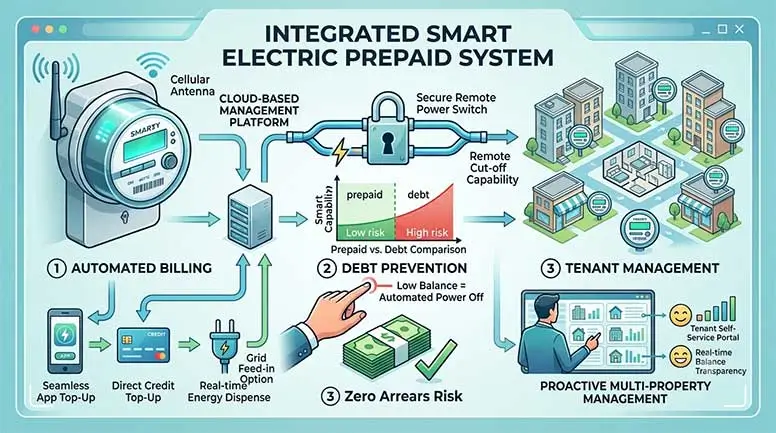
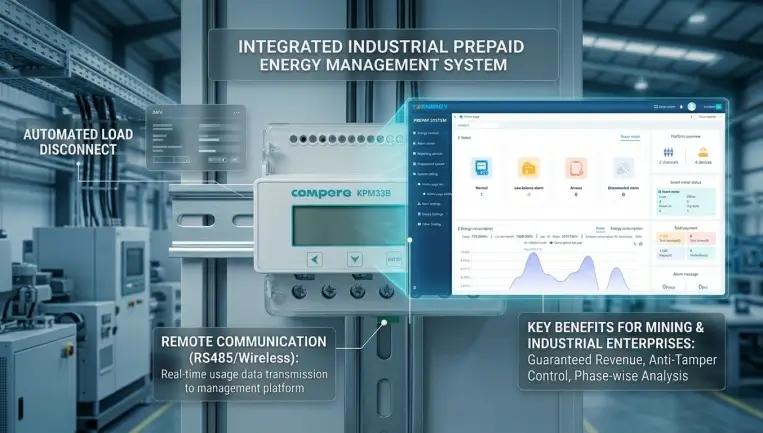
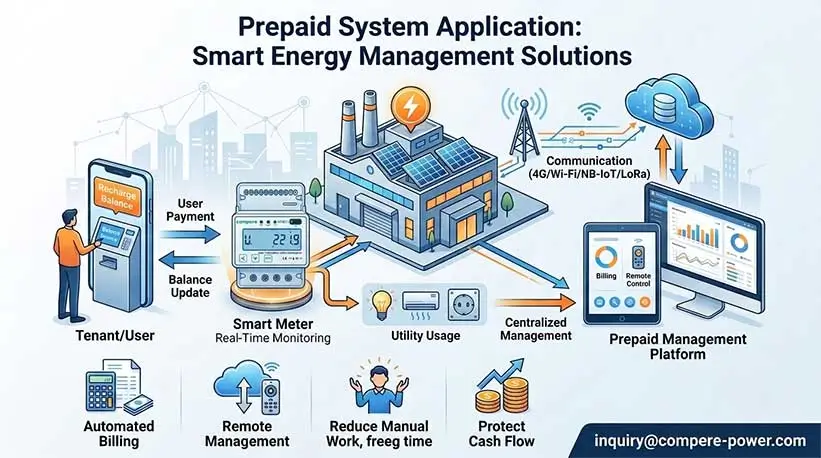
An enterprise-grade prepaid system application operates as a synchronized ecosystem where hardware and software communicate in real time.
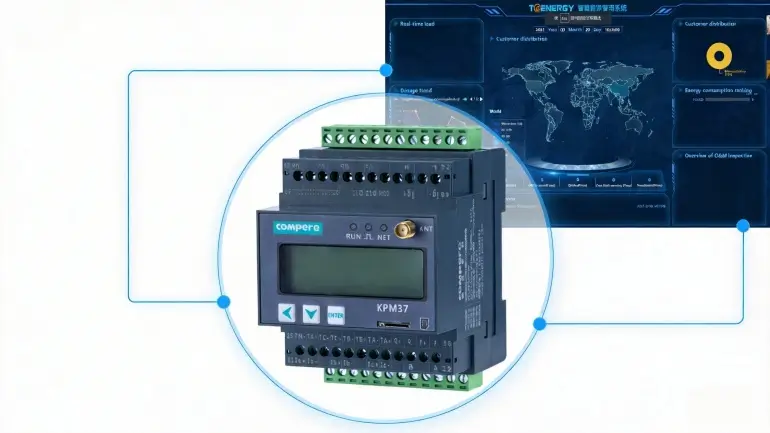
The hardware component functions as the localized gatekeeper. It constantly monitors active power parameters, tracks localized financial balances down to the decimal point, and maintains an internal latching relay capable of severing or restoring power depending on balance statuses.
Bidirectional data pathways bridge the gap between the field hardware and the host software platform. Depending on building architecture and geographic constraints, data is reliably routed via wireless IoT networks (such as NB-IoT, LoRaWAN, or 4G) or wired setups like RS-485 Modbus.
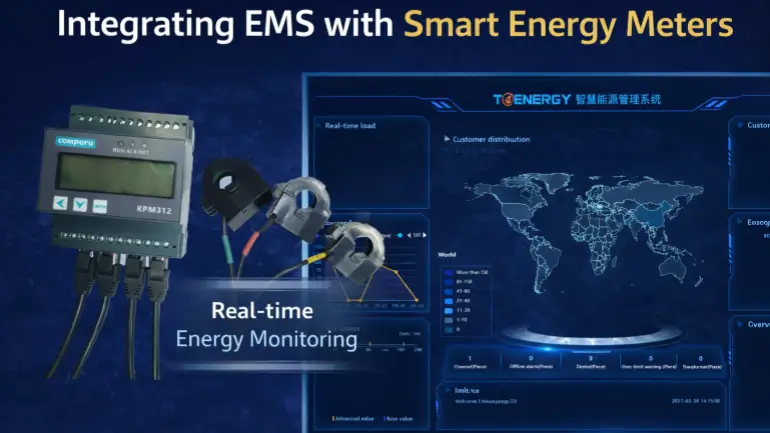
The software serves as the administrative core. Property managers log in to set dynamic tariffs, audit grid efficiency, analyze consumption trends, and manage user sub-accounts. The platform instantly transmits top-up balances to specific meters when users pay through integration endpoints like credit cards, mobile wallets, or banking APIs.
The Operational Workflow: User Recharge → Meter Balance Update → Electricity Consumption → Real-Time Data Collection → Remote Management.
Investing in an IoT prepaid meter solution delivers distinct operational advantages designed to optimize efficiency and maximize profitability.
| Parameter | Specification |
|---|---|
| Voltage Range | Nominal: 110V, 220V, 230V, 240V (Operational range: 0.7Un to 1.2Un) |
| Current Range | 5(60)A, 10(100)A (Direct Connection); 1.5(6)A (CT Connection) |
| Measurement Accuracy | Active Power: Class 1.0 / Class 0.5S; Reactive Power: Class 2.0 |
| Communication Method | Cellular (4G LTE / NB-IoT), LoRaWAN, RF Mesh, RS-485 Modbus |
| Installation Type | Standard 35mm DIN-Rail Mounting or Traditional Wall-Mount Base |
| Metering Function | Bi-directional Import/Export, Multi-Tariff (TOU), Maximum Demand |
| Display | High-definition LCD screen showing Balance, Cumulative kWh, Voltage, Current, Error Logs |
| Data Management | Non-volatile memory (stores data for >10 years during power failures) |
| Application Environment | Operating Temp: -25°C to +70°C; Ingress Protection: IP51 / IP54 |
The versatility of a prepaid energy management system makes it highly effective across a variety of modern real estate and industrial applications.
By deploying a smart electricity meter for apartments, property owners can transition utility collection duties directly to tenants. Residents top up balances at their convenience via a mobile app, eliminating late-payment risks and protecting landlords from covering unpaid bills during tenant transitions.
Multi-tenant office developments benefit immensely from dedicated commercial building energy management configurations. This system enables sub-metering tailored to specific corporate zones, automatically adjusting billing models based on peak corporate hours versus overnight baseline use.
Industrial operations require heavy energy inputs. Implementing a structured prepaid system application allows park management to allocate power allowances to high-draw manufacturing plants based on pre-paid capital commitments, drastically minimizing operational defaults.
For long-term and short-term landlords alike, a dedicated tenant electricity management system simplifies turnover management. Property managers can check exactly how much energy was consumed up to the minute a lease ends, preventing billing disputes between consecutive occupants.
Implementing a comprehensive prepaid utility infrastructure delivers measurable business value:
To maximize returns on a utility infrastructure project, keep these core criteria in mind during product procurement:
Verify that the core software architecture can scale effortlessly as your real estate or management portfolio grows. The underlying cloud framework should comfortably support adding thousands of additional monitoring points without degrading data processing speeds.
Building designs and materials can block wireless signals differently. Choose a provider whose system supports an adaptable array of communication protocols—such as combining cellular connections for isolated assets with LoRaWAN networks or RS-485 daisy-chains for dense structures.
Every commercial enterprise runs on unique backend accounting structures. Partner with a manufacturer capable of delivering custom software APIs, tailor-made payment gateway linkages, and specialized OEM branding configurations.
Deploying smart utility systems requires dependable technical expertise. Ensure your chosen vendor provides comprehensive engineering integration support, onsite installation guidance, and clear hardware documentation.
As an established manufacturer of high-precision intelligent metering hardware and energy management software, we offer end-to-end solutions that meet global standards. Our products combine field-tested metering components with agile cloud platforms, helping organizations transform energy tracking from an operational expense into an automated profit center.
Rather than offering piece-rate hardware parts, we deliver fully integrated hardware and software solutions customized to your specific regulatory and environmental requirements. From individual residential developments to cross-regional industrial grids, our systems help operators secure cash flow, optimize grid utilization, and reduce utility overhead.
Q1: What is a prepaid electricity system?
A: It is a connected utility framework where power delivery is dependent on upfront payment. Consumers add funds to their accounts electronically, and the smart meter automatically stops energy delivery if the balance drops to zero.
Q2: Where can prepaid energy meter systems be applied?
A: These frameworks are highly effective across multi-tenant residential environments, multi-family apartments, commercial office parks, industrial sub-lease environments, and student housing portfolios.
Q3: How does a prepaid system improve electricity management efficiency?
A: It completely automates the collection and invoicing process. By eliminating manual reading schedules and standardizing electronic payments, it reduces billing disputes and lowers asset management overhead.
Q4: Can prepaid systems support remote monitoring?
A: Yes. Integrated communication protocols allow property managers to monitor consumption patterns, track localized balances, and issue remote connectivity overrides from an internet-connected dashboard.
Ready to optimize your utility management workflows, secure upfront revenue, and eliminate collection overhead? We welcome property developers, facility managers, and energy consultants to leverage our industry expertise. Contact our engineering team at [email protected] to request a free technical consultation, get a detailed project assessment, and obtain a customized site solution tailored to your operational requirements.
Have you any problem, please contact us via message