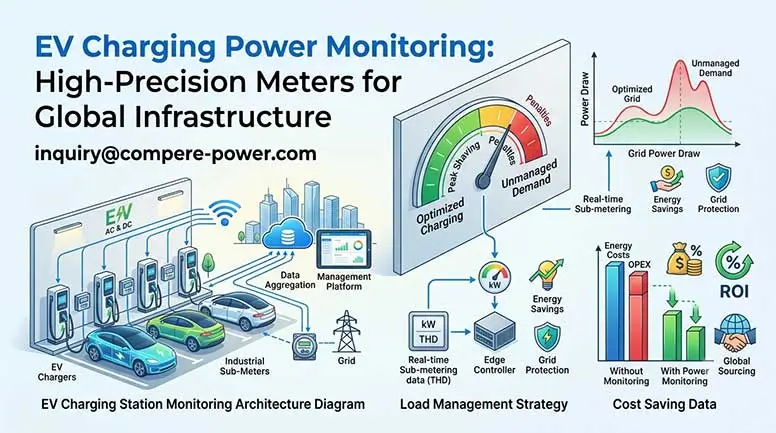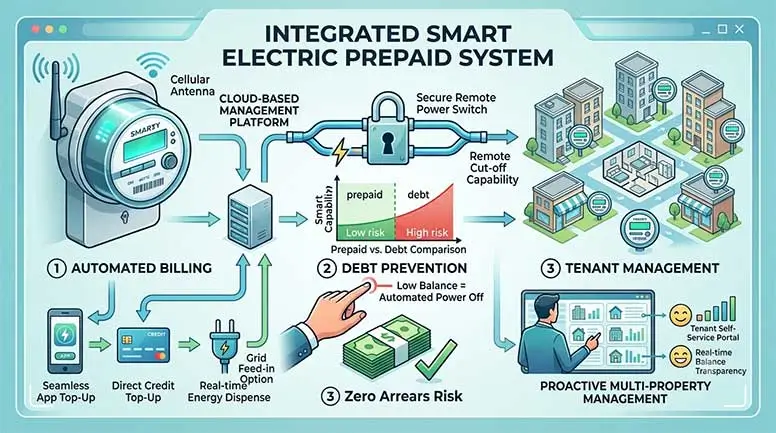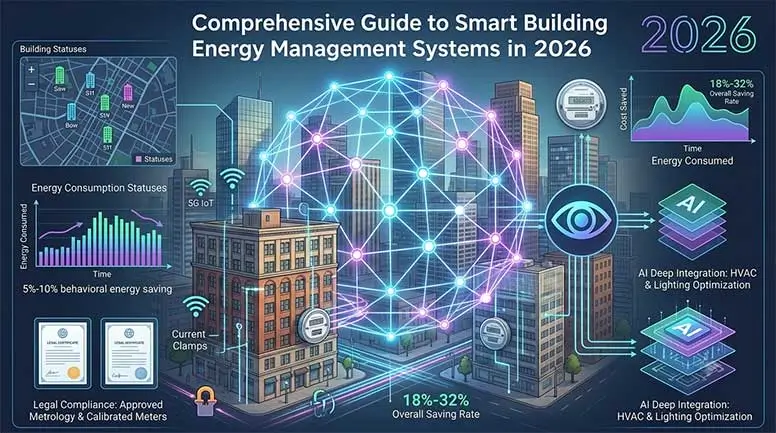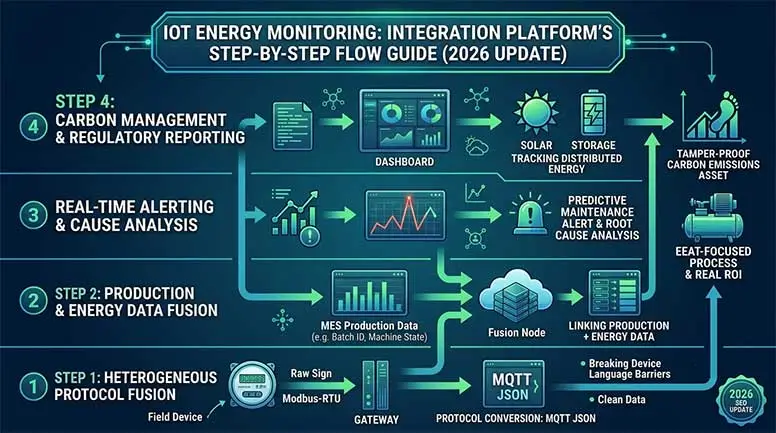

The global energy transition has transformed utility grid management from a predictable downstream distribution model into a complex balancing act. For modern power distribution companies, relying on legacy manual billing or fragmented data collection is no longer viable. Revenue protection, regulatory compliance, and carbon-reduction mandates now require deep, real-time visibility across the entire distribution network.
Implementing advanced AMR/AMI meter reading systems solutions for utility providers is the most direct path to turning raw operational data into high-value grid intelligence.
International utility procurement operations face three persistent operational pain points:
Our field-proven smart metering solutions address these challenges head-on by automating the entire data-to-billing pipeline, giving utilities absolute control over their commercial and technical assets.
True interoperability prevents vendor lock-in and secures utility infrastructure investments for decades. Our systems are built entirely on open, globally recognized communication and data protocols.
Industrial B2B buyers and state-owned power authorities evaluate infrastructure assets based on three core pillars: Rigorous Certification, Data Sovereignty, and Full Lifecycle Support.
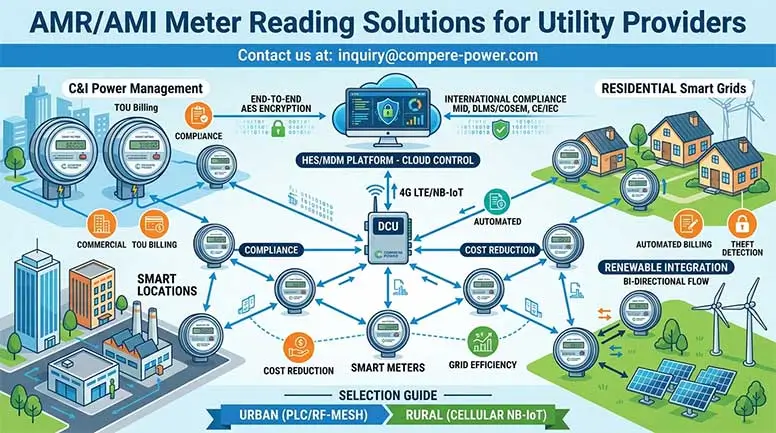
Our hardware engineering complies strictly with top-tier international standards. Every smart meter and concentrator unit holds valid MID (Measuring Instruments Directive) approval, DLMS/COSEM certification for open interface communication, and CE/IEC compliance markings. This guarantees immediate legal adherence and rapid integration into local grids across Europe, Asia, Africa, and Latin America.
As power grids become more digitalized, they become targets for cyber threats. Our AMI architecture employs end-to-end data encryption from the physical meter chip up to the central Head-End System (HES). Built-in anti-tamper mechanisms provide real-time alerts for magnetic field manipulation, neutral-line bypasses, and unauthorized terminal cover openings—instantly stopping revenue leakage.
Smart grid investments are budgeted on a 10-to-15-year lifecycle. We support your deployment at every stage: from local RF/cellular network optimization and pilot-phase testing to seamless Meter Data Management (MDM) software integration via Northbound RESTful APIs.
Need expert advice on communication topologies? Every distribution grid has distinct geographic and infrastructure variables. For a one-on-one consultation with an instrumentation specialist to evaluate the ideal communication mix for your network, send your project parameters to [email protected].
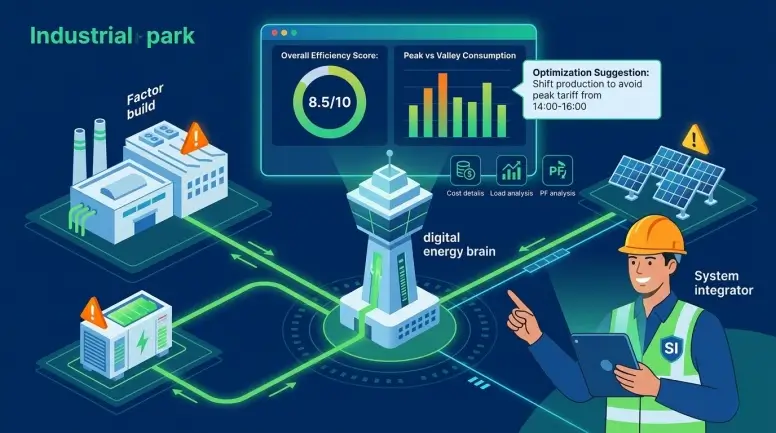
High-demand consumers require complex tariff structures and continuous monitoring. Our system delivers advanced Time-of-Use (TOU) pricing schemes, real-time voltage sag/swell alerts, and power factor logging. This allows utilities to implement effective demand-response strategies and safeguard heavy-duty grid assets.
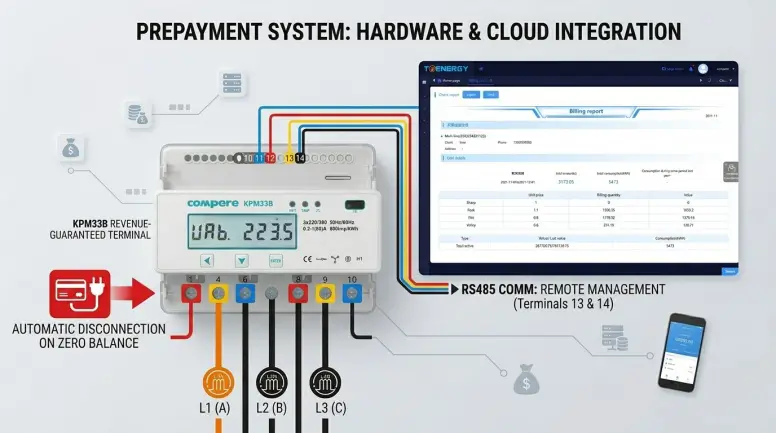
For residential areas, our solutions support automated post-paid billing and flexible remote credit management. Automated billing cycles simplify cash-collection operations, minimize administrative overhead, and completely eliminate the need for manual, on-site meter collection costs.
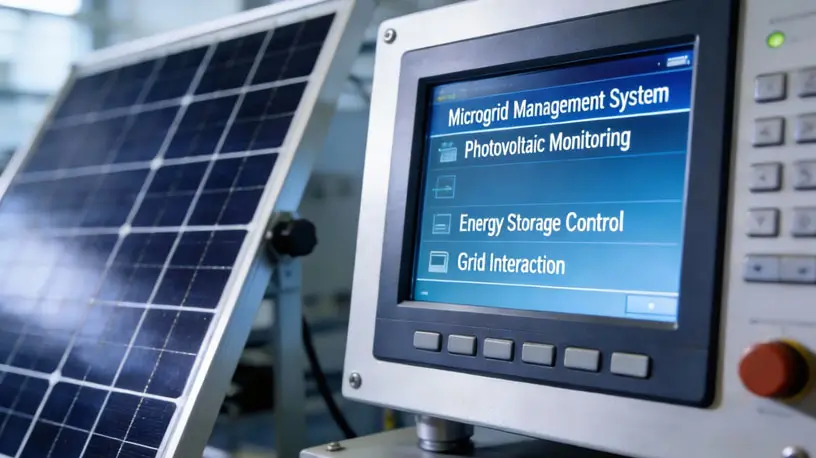
Modern distribution grids must handle decentralized green energy inputs. Our meters support true four-quadrant bi-directional metering, allowing utilities to precisely track both active and reactive energy imports and exports from distributed rooftop solar installations and localized microgrids.
To balance performance and deployment costs, utility operators must match their communication architecture to local terrain and node density:
A: Our software layer is engineered with open integration in mind. Through standard Northbound APIs, XML/JSON web services, and database connectors, our system shares seamless data exchanges with major enterprise platforms such as SAP Utilities, Oracle Utilities, and custom legacy billing software.
A: Every smart meter contains robust internal non-volatile memory capable of storing up to several months of hourly load profiles locally. If a cellular tower or local concentrator drops offline, data collection continues uninterrupted. The meter automatically pushes the backlogged data once connection is restored, ensuring zero gaps in billing information.
A: Our meters are built with industrial-grade components designed for harsh electrical environments. They feature wide operating voltage ranges (frequently from 70% to 130% of nominal voltage) and integrated metal oxide varistors (MOVs) to withstand high-voltage surges, ensuring long-term reliability even on unstable rural networks.
Optimizing a utility network requires an experienced technology partner who understands the realities of field deployments. Whether your main goal is reducing non-revenue electricity losses, deploying a modern billing system, or scaling your advanced metering infrastructure, our engineering division provides tailored support from specification to commission.
Contact [email protected] today to collaborate with a dedicated application engineer, get answers to your technical questions, or secure an official quotation for your next pilot deployment.
Have you any problem, please contact us via message