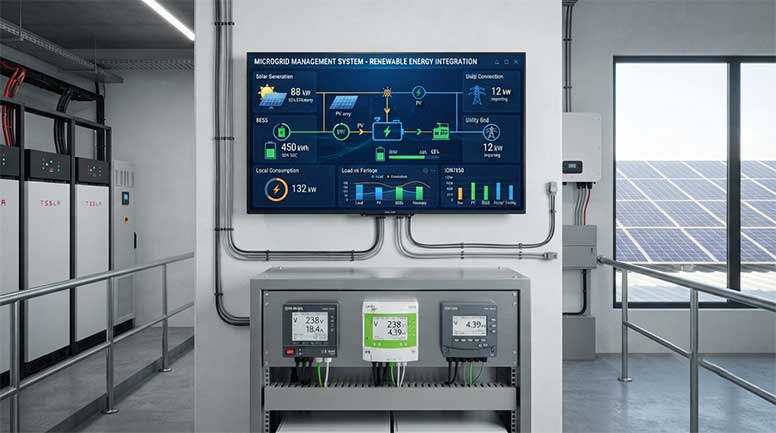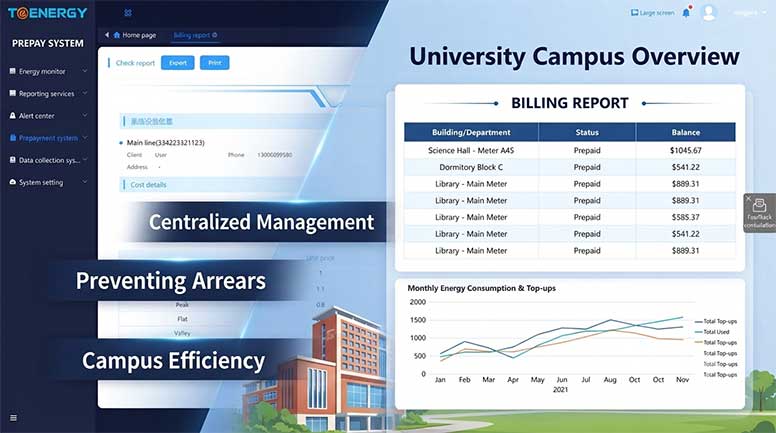

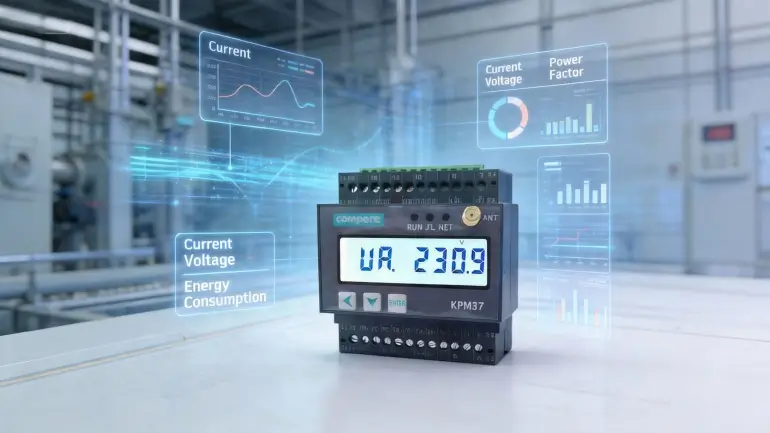
In today's pursuit of Industry 4.0 and carbon neutrality, businesses need more than just knowing "how much electricity they use"; they need real-time knowledge of "how electricity is used." Energy management systems integrating Modbus meters have become the mainstream choice for achieving this goal. With its high stability, standardized protocol, and excellent cost-effectiveness, this solution is helping countless factories and commercial buildings achieve refined energy efficiency management.
As one of the most widely used communication protocols in the industrial field, Modbus offers irreplaceable advantages in energy monitoring:
High Standardization: Whether it's a DIN rail energy meter or a panel meter, almost all mainstream smart meters support the RS485 Modbus-RTU interface, ensuring seamless compatibility between devices.
Low Cabling Costs: Daisy chain connections can be achieved using shielded twisted-pair cable, and a single bus can support dozens of meters, significantly reducing construction material costs.
Rich Data: In addition to basic cumulative energy consumption (kWh), Modbus meters can also transmit real-time parameters such as current, voltage, power factor, harmonics, and voltage sag.
A complete Modbus-based energy management system typically consists of three layers. Compere provides core technical support at each layer:
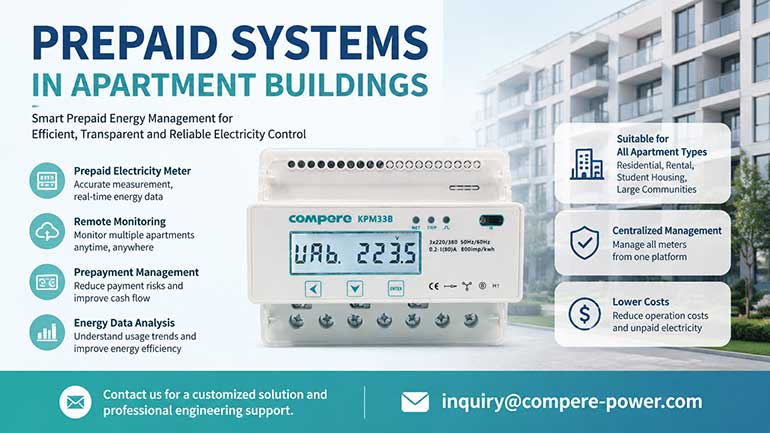
Compere's KPM series smart energy meters act as the system's "tentacles," responsible for real-time, high-precision electricity data acquisition.
High-Precision Measurement: Class 0.5S accuracy ensures reliable billing and analysis.
Extensive Modbus Registers: Detailed datasheets are provided for easy access by third-party platforms.
In large factories, a communication gateway is needed to convert Modbus-RTU signals to the network.
Protocol Conversion: Converts serial signals to Modbus-TCP or MQTT protocols for uploading to the cloud via Ethernet or WiFi.
Data Caching: Ensures that meter data is not lost during network fluctuations.
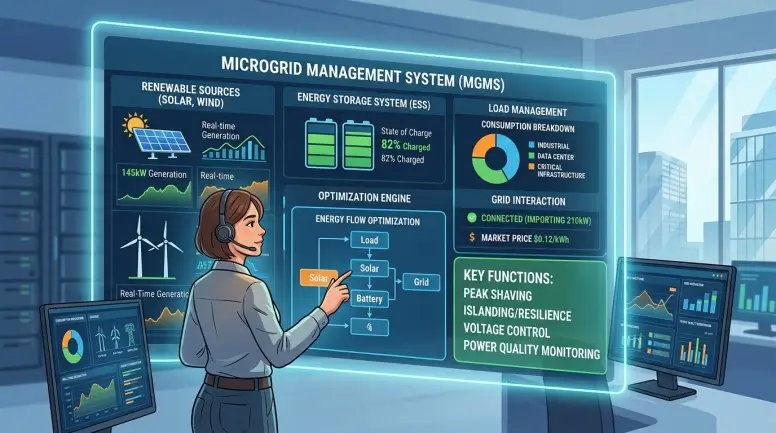
This is the system's "brain," responsible for visualizing data uploaded from Modbus:
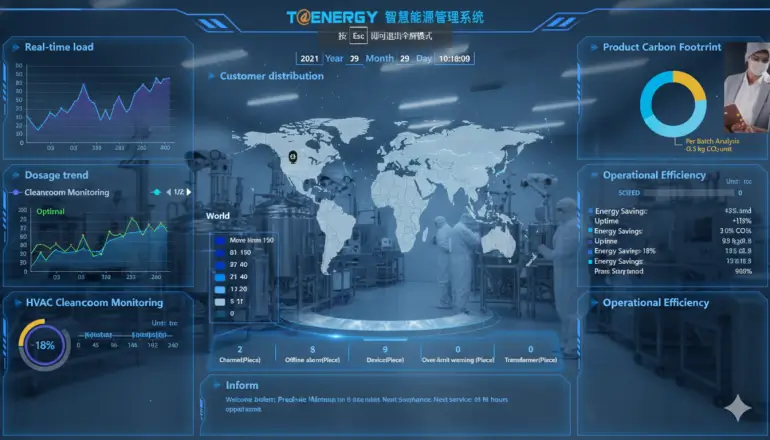
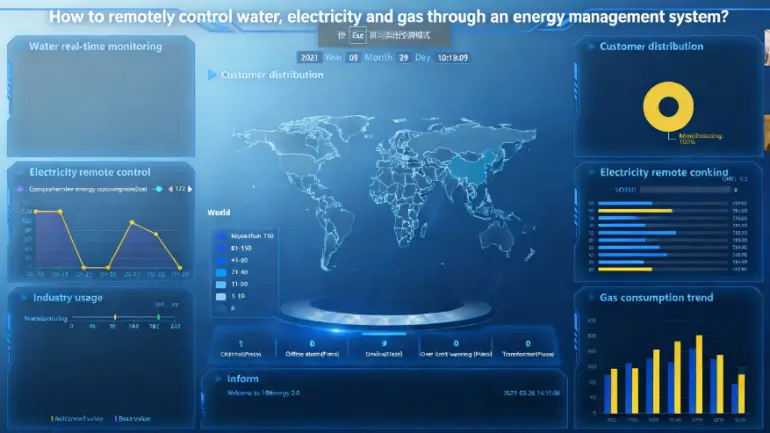
Real-time Monitoring Charts: Transforming dry numbers into load curves, pie charts, and heat maps.
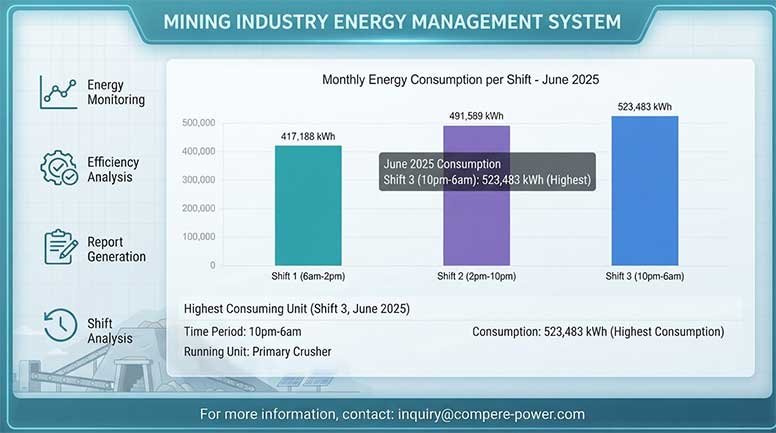
Itemized Accounting: Performing energy consumption statistics by workshop, production line, or department, automatically generating daily/monthly reports.
Anomaly Alarms: When the Modbus meter detects voltage fluctuations or excessive harmonics, the system immediately pushes alerts via email or app.
Eliminating Energy Consumption Blind Spots: Detecting standby power consumption at night, assessing equipment aging, and driving energy-saving decisions through data.
Optimizing Electricity Costs: Adjusting the scheduling of high-energy-consuming processes through peak-valley electricity price analysis, leveraging price to reduce electricity costs.
Predictive Maintenance: Monitoring motor power fluctuations and power quality, detecting potential problems before major equipment failures occur through Modbus data, reducing unplanned downtime.
Building an efficient energy management system doesn't necessarily require exorbitant customization costs. Utilizing mature and stable Modbus meters combined with powerful EMS software represents the most cost-effective digital upgrade solution currently available.
Have you any problem, please contact us via message