
Running an industrial park means watching energy leave the meter in dozens of places at once—factory floors, tenant units, shared lighting, and common utilities. For operators and facility management teams, the hardest part is rarely the equipment. It is the absence of one reliable view of where energy goes and what it actually costs. A purpose-built energy management system for industrial park management service gives management teams that view, and turns it into lower operating costs and steadier day-to-day control.
This guide is written from how energy monitoring is deployed in real manufacturing and multi-tenant parks. It walks through the problems management teams hit first, how a modern system is built from meters, connectivity, and software, where it fits across park types, and what to verify before selecting a supplier.
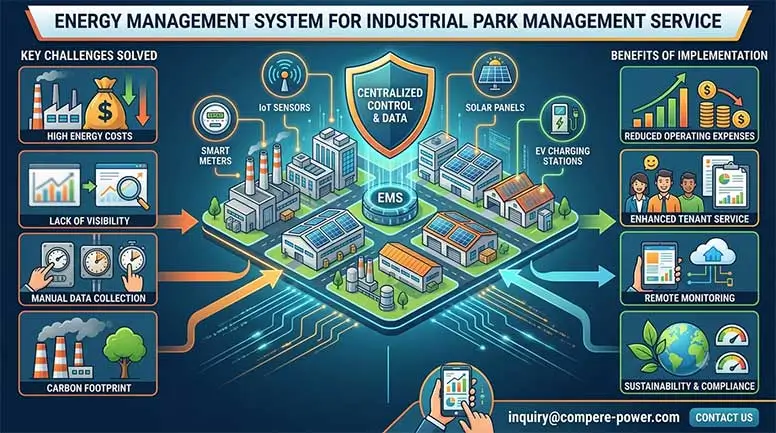
An industrial park usually bundles multiple factories, production facilities, public facilities, and shared infrastructure under a single management scope. Electricity spend climbs quickly, and splitting that cost back to the right building or tenant is awkward when supplies are shared. With limited day-to-day control over consumption, teams often see the bill only after the waste has already happened.
In many parks, each building runs its own energy setup and the data sits in separate systems that never talk to each other. Producing a park-wide total means manual exports and guesswork. Without a unified monitoring layer, nobody can quickly tell which area is over-consuming or where energy is leaking.
Scale is the real obstacle. Multiple tenants, many consumption points, and layered management requirements make manual coordination slow and patchy. What teams need is one centralized method to manage energy across the whole estate from a single place.
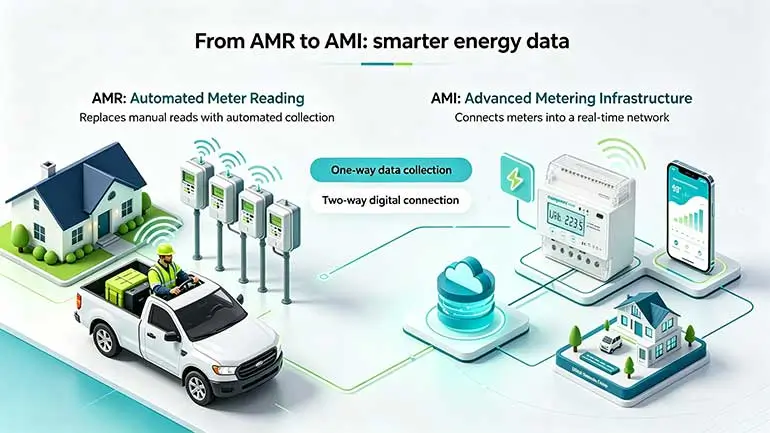
Older approaches lean on site walks and periodic meter reads. Collection is slow, trends arrive late, and catching a problem in time to fix it is rare. That gap is exactly why parks move toward digital energy management.
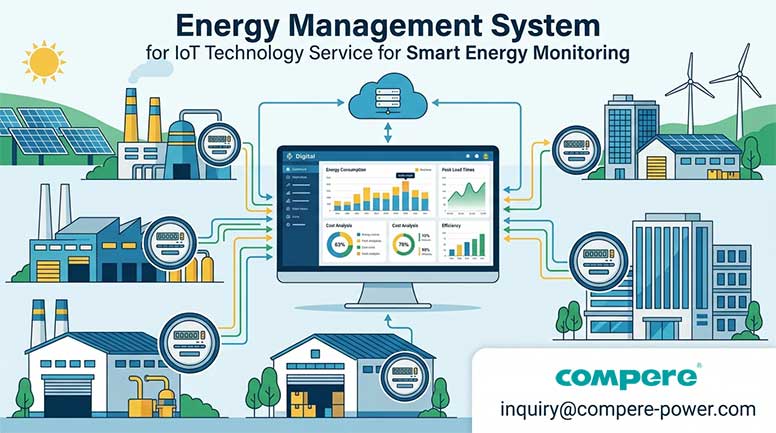
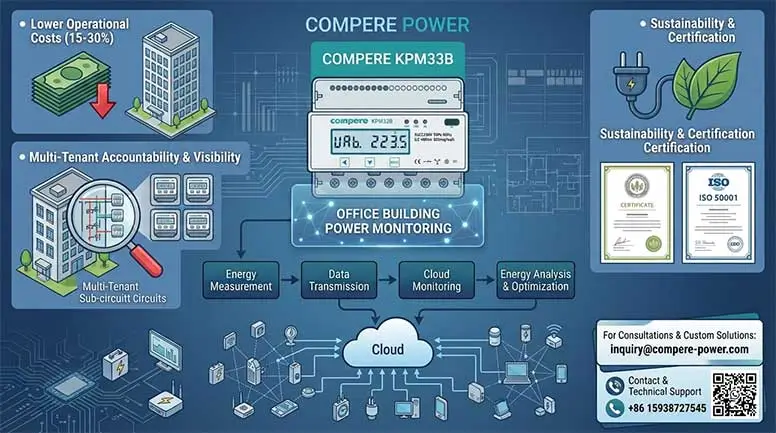
A working system is not software alone. It is smart meters at the edge, IoT links that carry the data, and a platform that makes the data useful.
Smart electricity meters form the foundation. They record consumption at each point, send readings automatically, and separate usage by area or building. Accurate metering is what every other feature depends on, and it is the core of any credible industrial park energy management system.
Once meters are connected, a remote energy monitoring system lets managers watch multiple sites from one screen. Field trips drop, response times improve, and a single operator can cover a large estate. For distributed parks, this is where efficiency gains appear first.
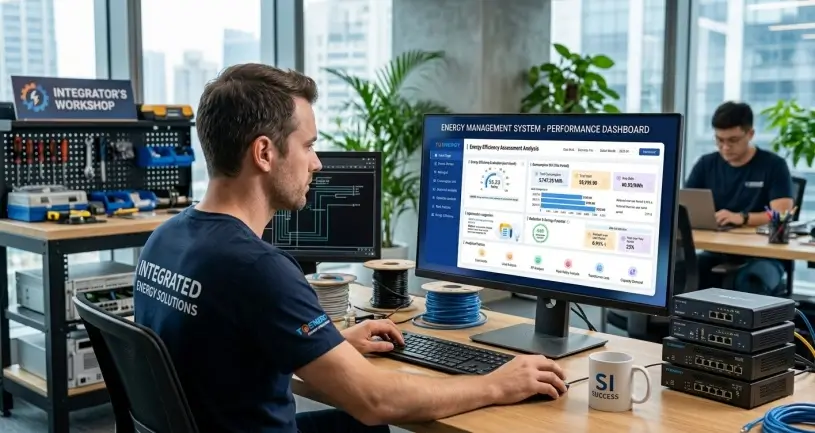
The IoT energy management platform gathers the streams into dashboards, consumption analysis, period comparisons, and scheduled reports. Managers stop guessing and start seeing which shifts, lines, or tenants drive the load.
Visibility leads to action. With the data in hand, teams can target waste, shift flexible loads away from peak windows, and trim monthly operating expenses. Repeated over time, those adjustments are what an industrial energy efficiency solution is built to deliver.
On a production site, the system tracks factory electricity use, surfaces inefficient runs, and cuts consumption during idle periods. Line- and shift-level views help managers act on real numbers instead of estimates.
For parks with several occupiers, the system tracks each tenant's usage cleanly, which keeps allocation fair and billing simple. That transparency is a strong reason many operators adopt an energy monitoring system for industrial parks.
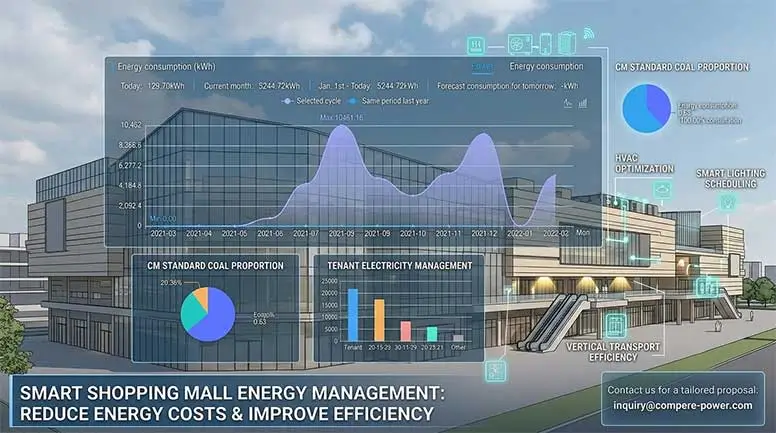
Lighting, common areas, and shared infrastructure equipment tend to run unnoticed. Sub-metering these points exposes waste and keeps shared-cost areas under control.
In digital-transformation programs, the same platform supports efficiency targets and modern management practice, making it a practical foundation for a smart energy management platform rollout.
Live readings of consumption, power, and trend lines let teams catch anomalies early, before they become costs.
Centralized monitoring with remote access means multiple sites can be run from one location, reducing the need for on-site checks.
Comparison views, automated reports, and suggested actions turn raw readings into decisions a manager can defend.
Sites differ. The system works over WiFi, 4G, LoRaWAN, RS485, and Modbus, so it fits existing panels and layouts without a full rebuild.
| Solution Value | Business Impact |
|---|---|
| Centralized Monitoring | One view of energy across all buildings and tenants |
| Energy Data Analysis | Finds saving opportunities that manual reads miss |
| Remote Management | Cuts daily workload and site travel for operators |
| Smart Meter Integration | Gives accurate, audit-ready consumption records |
| Multi-Site Support | Scales from a single park to a regional portfolio |
| Transparent Allocation | Makes tenant billing clear and reduces disputes |
Prefer a supplier with comparable industrial projects and real knowledge of park operations. Familiarity shortens commissioning and avoids beginner errors.
Check that the offer covers both hardware and software, plus end-to-end support from design through installation.
No two parks share the same layout or tariff structure. Look for flexible engineering rather than a fixed box of parts.
Ask what happens after go-live. Installation guidance and ongoing service separate a vendor from a partner.
We build from the meter up. Our background in smart electricity meter manufacturing, combined with field experience in industrial energy monitoring, means the hardware and platform are designed to work together. We shape each deployment around the park's actual circuits, tenants, and goals, and we stand behind it with engineering support. The aim is concrete: lower operating cost and clearer management, not vague promises.
It is an integrated setup of smart meters, IoT communication, and a management platform that measures, monitors, and helps optimize energy use across a park.
By showing exact consumption and centralizing monitoring, it helps teams find waste, manage peak demand, and lower recurring energy bills.
Smart electricity meters at consumption points, IoT communication modules, and an energy management platform to collect and analyze the data.
Yes. The platform is built for centralized, remote monitoring of many buildings and sites from a single dashboard.
If you are planning an industrial park energy management project, our engineers can walk you through a free consultation, help scope an on-site solution tailored to your layout and tariff structure, and provide one-to-one guidance from design to commissioning. Reach us at [email protected] to start the conversation.
Have you any problem, please contact us via message