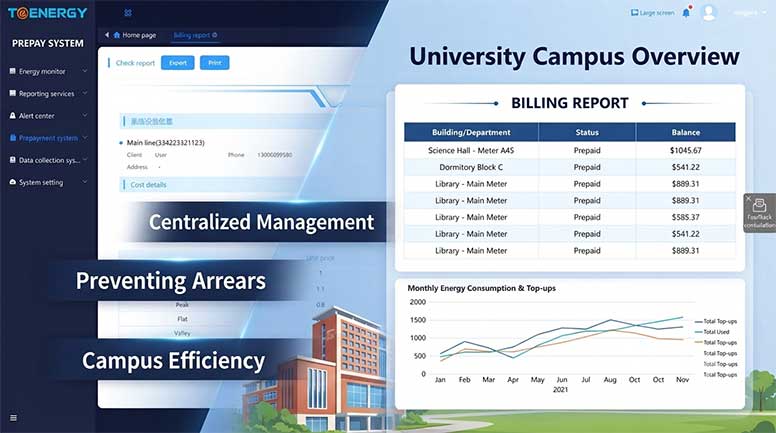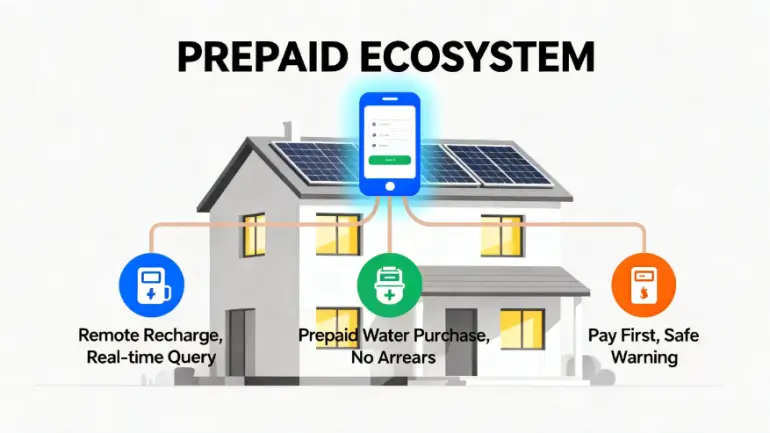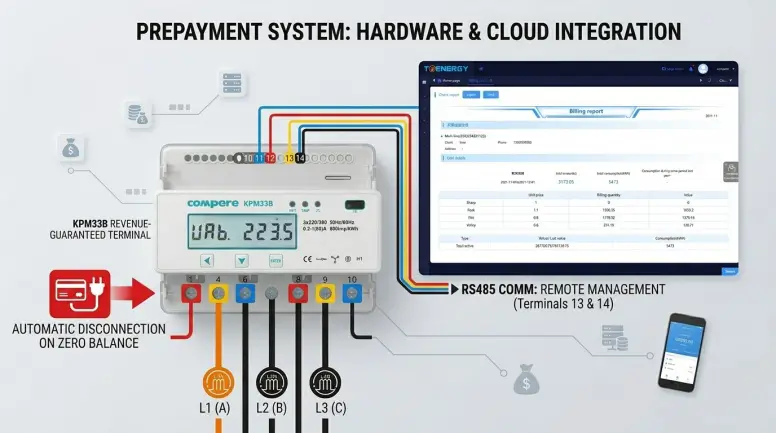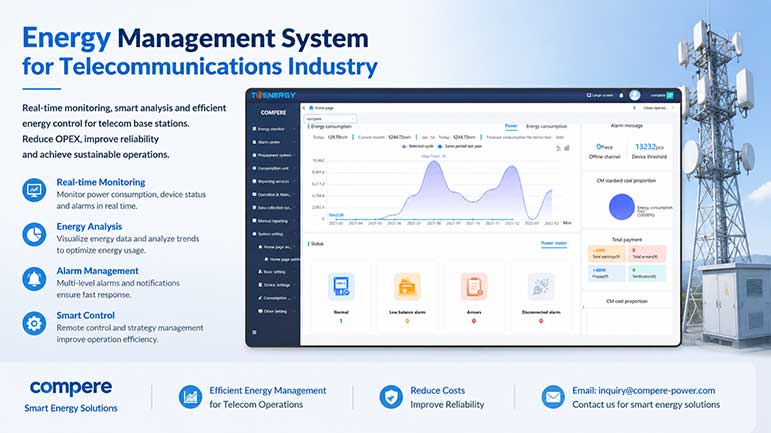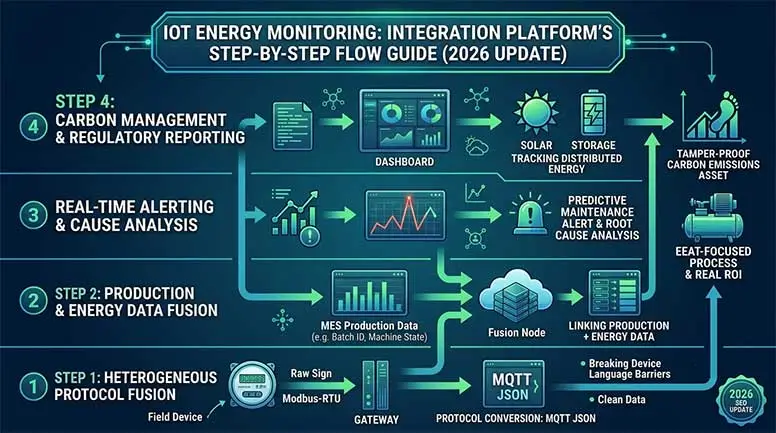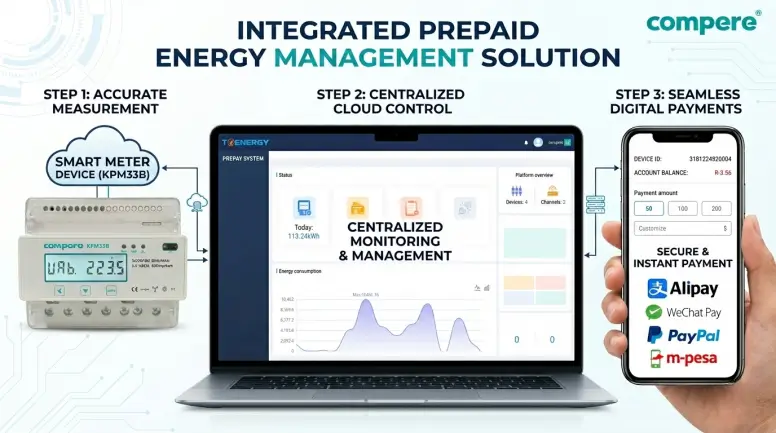


A prepayment system uses a "top-up, then use" approach to intelligently meter and manage costs for resources such as electricity, water, air conditioning, and conference rooms. The system consists of the following core components:
User Terminal: Tenants can top up and view balances and usage through a mobile app, mini-program, or IC card;
Metering Terminal: Smart electricity, water, or energy-consuming devices installed in each tenant's area;
Management Platform: The property management or operator monitors energy consumption, top-up, and balances in real time through the backend;
Control System: Automatically issues notifications or disconnects service when balances are low, preventing defaults and resource waste.
1. Electricity and Air Conditioning Energy Management
Electricity and central air conditioning account for a significant portion of commercial buildings' energy consumption, especially in multi-tenant environments. Sharing and billing often lead to disputes. Prepaid water meters and intelligent control systems enable:
2. Water Resources and Public Facility Management
Shared facilities such as public restrooms, pantries, and conference rooms can be managed using prepaid water meters or time-based systems.
Tenants or departments top up before use, and the system automatically deducts charges based on time or usage, ensuring fair usage and cost sharing.
3. Charging for Coworking and Ancillary Services
In coworking environments, prepaid water systems can be extended to include printing, conference room reservations, locker use, and coffee bar consumption.
Unified Account System: Links user accounts to workstations for automated billing.
Improves user experience: Eliminates manual billing and cumbersome reimbursement.
Data analysis: Helps operators optimize supporting resource allocation and charging strategies.
4. Parking and Electric Vehicle Charging Management
Combined with a smart parking system and charging station management platform, tenants or visitors can pre-charge their accounts for automatic parking and electric vehicle charging, enabling cashless, unattended, and self-service management.
The application of prepayment management systems in commercial buildings is driving the transformation of office buildings from traditional property management to smart operations management. It not only enables tenants to use resources more autonomously, more energy-efficiently, and more conveniently, but also enables property owners to achieve higher efficiency and profitability. With the continued evolution of the digital office ecosystem, prepaid payment systems will become a critical infrastructure for smart buildings and sustainable business development.
Have you any problem, please contact us via message