
You might worry about your home electricity bill after leaving the air conditioning on all day. Now, imagine a bill over a million dollars—every single month. For many large manufacturing plants, according to industry data, that staggering figure is a reality, representing an immense amount of energy.
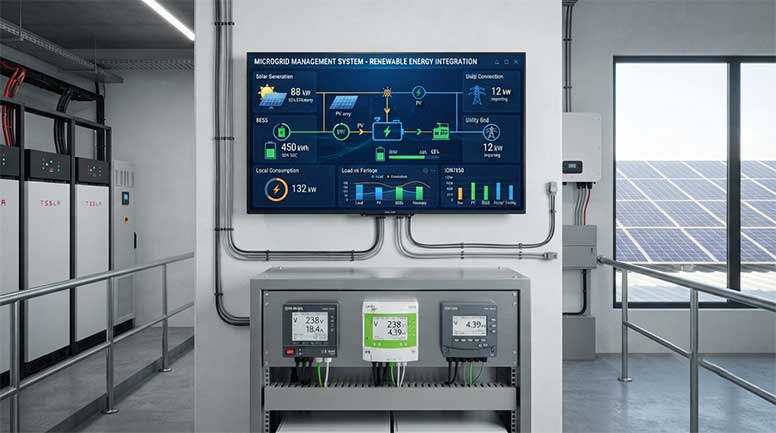
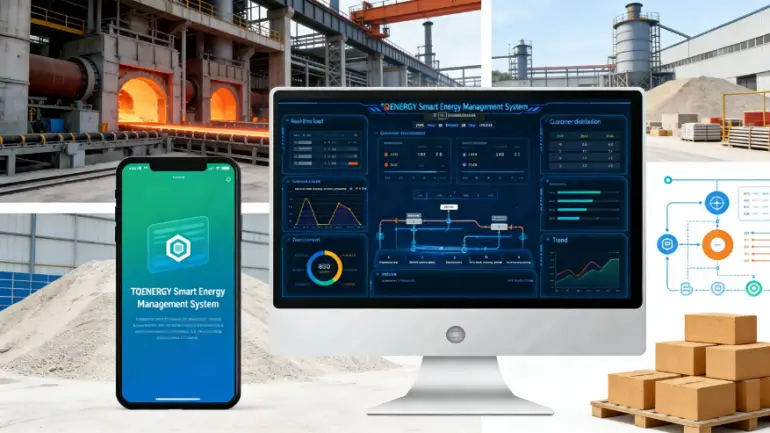
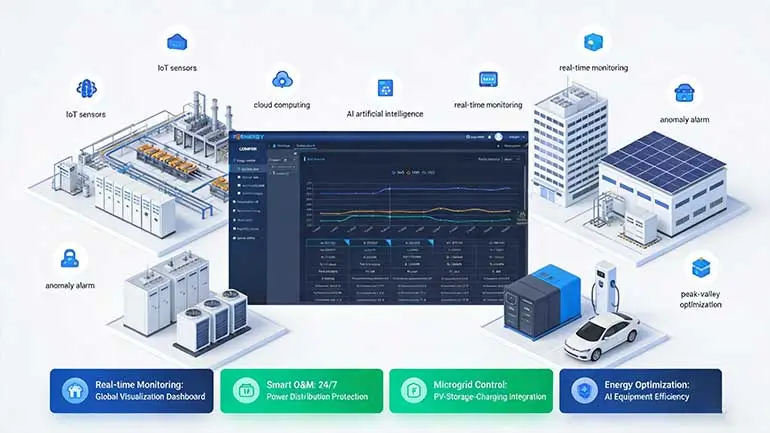
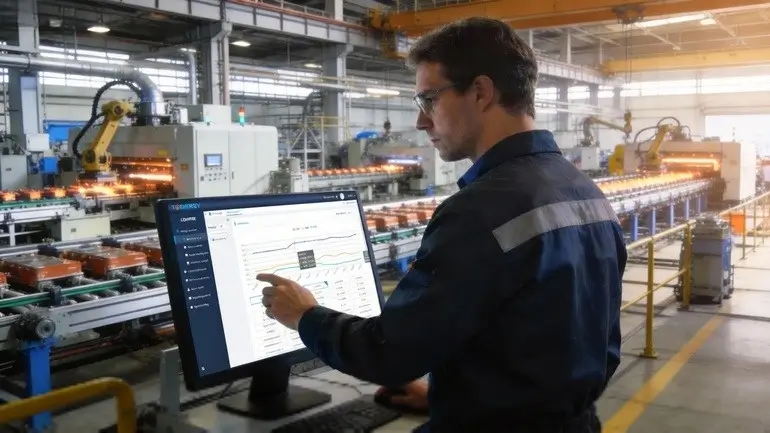
To tackle this massive expense, factories are installing a kind of “smart brain.” This technology, known as an industrial energy management system for manufacturing plants, works much like a smart thermostat in your home but on an epic scale, seeing where every watt of power goes.
Instead of just cutting power, these systems focus on factory energy usage optimization. They intelligently see when machines are running needlessly and make small, automatic adjustments. This is the key to dramatically reducing factory electricity costs without ever slowing down production.
In every factory, something invisible is wasting power. Think of them as "Energy Ghosts": moments where electricity is consumed without creating any value. It’s the industrial equivalent of leaving every light on in an empty house, but the cost isn't just a few dollars—it's thousands.
So, what do these ghosts look like in the real world? It might be a massive conveyor belt motor left running at full speed during a lunch break. Or, it could be a machine using 100% of its power to do a job that only requires 50%. These small, constant drains add up to a staggering amount of waste.
The real challenge is that this waste is invisible on a standard electricity bill, which just shows one giant number. Without knowing where and when energy is being used, factory managers can't spot the ghosts. To solve this, they first need a way to give the factory "eyes."
To hunt these energy ghosts, a factory first needs to be able to see in the dark. A single monthly bill is like trying to find a leaky faucet by only looking at your total water usage—it’s impossible. It tells you that you used energy, but not where, when, or how. It’s a complete black box.
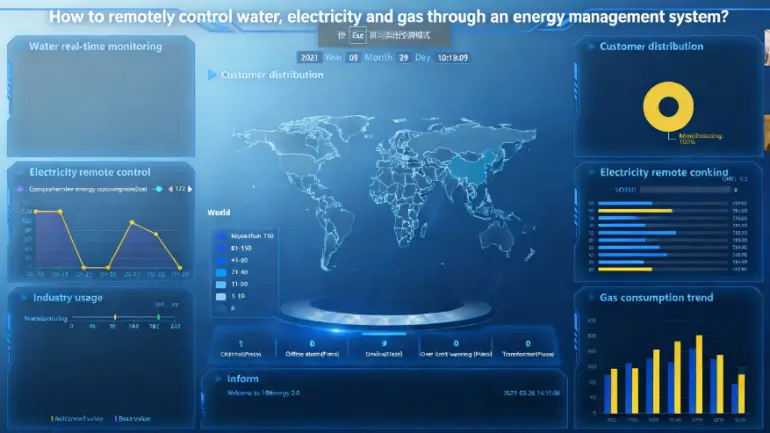
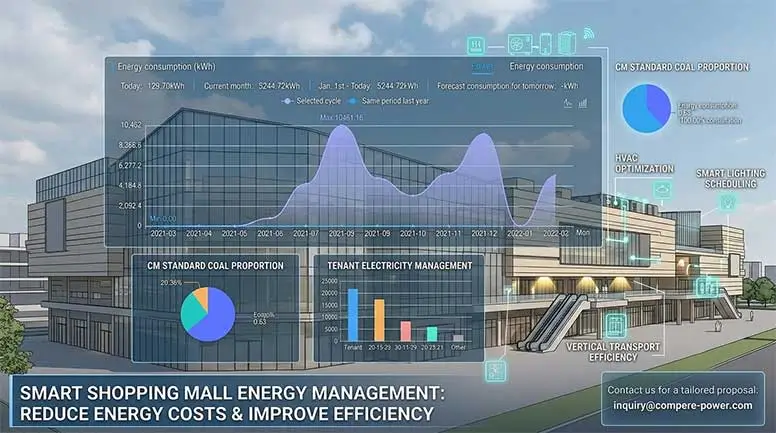
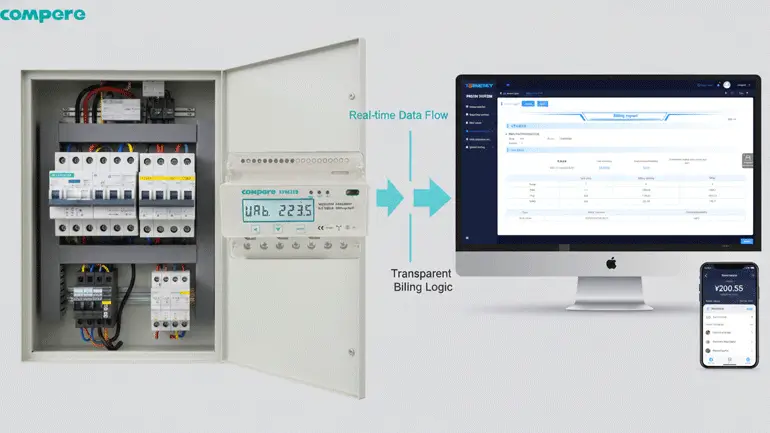
This is where smart sensors come in. Instead of one giant meter for the entire building, an energy management system installs dozens or even hundreds of small, connected meters on individual pieces of equipment—the motors, the compressors, the lighting systems. Think of it as giving each major machine its own personal, real-time electricity meter, turning the entire factory into a detailed energy map.
With this new level of detail, the invisible waste finally becomes visible. The energy ghost haunting that conveyor belt during lunch breaks is suddenly caught red-handed. But gathering all this data is just giving the factory its "eyes and ears." The next step is giving it a brain to understand what it’s seeing and find the hidden energy hogs.
All that sensor data is overwhelming on its own—it’s like listening to a thousand conversations at once. The system’s software “brain” acts as a tireless detective, automatically sifting through this noise for clues. It never gets tired, never takes a break, and its only job is to hunt for waste.
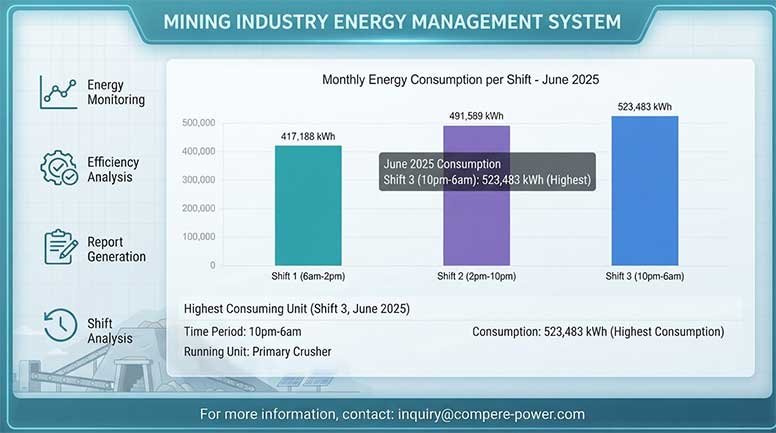
Instead of just logging numbers, the software looks for patterns that don’t make sense. It asks questions like, “Why are the giant air compressors running at full power on a Saturday when the plant is closed?” or “Why does that conveyor belt motor stay on during the half-hour lunch break every single day?” This constant analysis is the key to effective factory energy usage optimization.
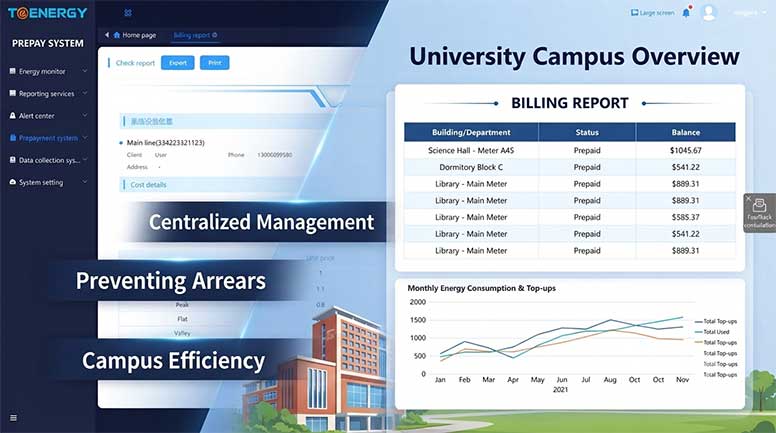
Crucially, the detective puts a price tag on its findings. It transforms a strange pattern into a clear, actionable insight: “The compressors running on weekends are wasting $8,000 per month.” Now, the factory doesn’t just know there’s a problem—it knows exactly how big it is, paving the way to intelligently take action.
Knowing where energy is wasted is powerful, but a true Energy Management System takes the next step: it acts. This isn’t about sending an alert to a manager; it’s about the system making smart, automated adjustments to machinery in real-time, helping with crucial utility bill management for industrial plants.
Think of it like Uber’s surge pricing. The electrical grid has its own ‘rush hour’—usually hot afternoons—when power use spikes. During this “peak demand,” utilities charge sky-high rates. Using too much power at the wrong time can massively inflate a factory’s bill.
To avoid these fees, a smart factory energy solution acts pre-emptively. It might over-cool a large refrigerated warehouse an hour before the peak hits, when power is cheap. Then, during the expensive period, it lets the cooling system coast, saving a fortune without affecting the
Have you any problem, please contact us via message