

As an energy and equipment intensive industry, the mining industry requires significant amounts of electricity, fuel, and other energy resources for its production processes. However, traditional mining companies face numerous challenges in energy management, including high energy consumption, uncontrollable costs, and inefficient equipment. With the advancement of digitalization and intelligentization, the application of energy management systems in the mining industry has become a crucial tool for enhancing corporate competitiveness.
1. High and Dispersed Energy Consumption
Mining operations involve multiple processes, including mining, transportation, crushing, and mineral processing. Each of these processes consumes significant energy, with electricity consumption, in particular, constituting a significant portion of mining operating costs. Under traditional management models, energy data collection is incomplete, energy usage is fragmented, and centralized management is difficult.
2. Uncontrollable Energy Costs
Energy prices fluctuate significantly, and mining companies lack sophisticated cost analysis tools, resulting in unpredictable energy expenditures, further impacting overall production cost management.
3. Low Energy Efficiency
Most mining equipment consists of heavy machinery and large production lines. During operation, there are instances of idling, idleness, and inefficient operation, resulting in significant energy waste. Traditional monitoring methods are unable to promptly detect abnormal energy consumption.
4. Environmental and Policy Pressures
The mining industry faces stringent environmental protection requirements and energy conservation and emission reduction policies. Enterprises that fail to effectively control energy consumption and carbon emissions face fines, production restrictions, and even the risk of suspension.
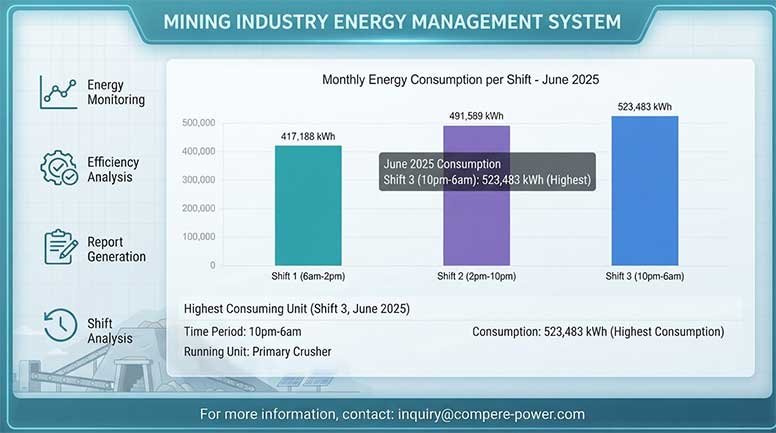
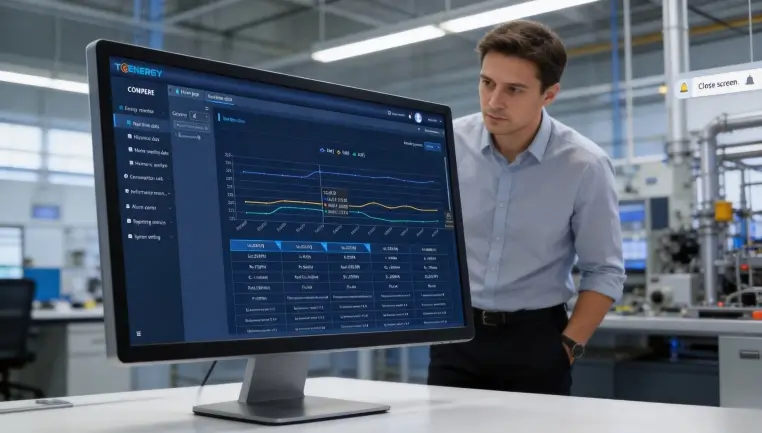
An energy management system uses information and digital technology to monitor, analyze, and optimize the entire energy production, transmission, and consumption process. Its core functions include:
Data Collection and Monitoring: Real-time collection of energy data such as electricity, fuel, and water for full-process monitoring.
Energy Consumption Analysis and Optimization: Identifying energy saving potential and waste areas through big data analysis, energy consumption comparison, and energy efficiency evaluation.
Equipment Management: Monitoring the operating status and energy consumption of key equipment, guiding equipment maintenance, and optimizing operations.
Reporting and Decision Support: Generating energy usage reports and cost analyses to inform management decisions. Early Warning and Alarm: Real-time warnings are provided for abnormal energy consumption or equipment anomalies, reducing energy waste and accident risks.
1. Mining
EMS enables real-time monitoring of mining machinery, conveying systems, and ventilation equipment, optimizing equipment operating time and load, and reducing electricity and fuel consumption. For example, optimizing the scheduling of mine hoists and excavators can significantly save energy.
2. Ore Dressing
Ore dressing processes typically consume large amounts of electricity. Monitoring the energy consumption of key processes such as crushing, grinding, and flotation through EMS enables energy-saving process adjustments and improves energy efficiency per unit of output.
3. Transportation and Logistics
EMS manages load and optimizes the scheduling of mining area transportation equipment, such as belt conveyors, mine trucks, and hydraulic loaders, to reduce idle operation and unnecessary energy consumption.
4. Comprehensive Energy Optimization
EMS centrally manages data on various energy sources, including electricity, gas, and coal, enabling comprehensive energy optimization across departments and production processes, helping mining companies achieve energy conservation, emission reduction, and cost control.
Energy Saving and Consumption Reduction: Through refined management and equipment optimization, overall energy consumption can be reduced by 5%-20%.
Cost Control: Real-time monitoring and analysis of energy data improves energy procurement and usage efficiency, reducing operating costs.
Improving Equipment Efficiency: Through anomaly detection and maintenance guidance, equipment lifespan is extended and production efficiency is improved.
Compliance and Environmental Protection: Real-time monitoring of carbon emissions and energy usage ensures compliance with regulatory requirements.
Intelligent Decision Support: Data visualization and analytical reports provide a scientific basis for business decision-making.
As the mining industry moves towards digitalization and green development, energy management systems have become a key tool for enterprises to improve efficiency, reduce costs, and achieve sustainable development. Through the application of EMS, mining enterprises can not only achieve transparency and refined management of energy use, but also maintain a sustainable development advantage in the fiercely competitive market.
Have you any problem, please contact us via message